Liz Nugent’s second novel, Lying in Wait (Penguin Ireland), opens with a shockingly provocative line: ‘My husband did not mean to kill Annie Doyle, but the lying tramp deserved it.’ The speaker is the reclusive Lydia Fitzsimons; her husband, Andrew, is a respected Dublin judge. We quickly learn that Lydia, unable to have more children after the birth of her son Laurence, persuaded a reluctant Andrew to father a child with Annie. When Annie – a troubled teenager with addiction issues – first lies to Andrew about being pregnant, and then tries to blackmail him, the tragedy of the novel’s first line ensues.
It’s an intriguing set-up, but Nugent, who employed multiple narrative voices in her award-winning debut Unravelling Oliver, again deploys conflicting perspectives in Lying in Wait. We hear from Laurence Fitzsimons, an overweight and bullied teen who becomes obsessed with the missing Annie Doyle, particularly when he realises that his father is lying about his whereabouts on the night Annie Doyle disappeared. Meanwhile, Karen Doyle, Annie’s younger sister, refuses to believe that Annie would simply run away. Determined though she is to get to the truth of Annie’s disappearance, there is very little Karen can do when the Garda detectives investigating the case wash their hands of the trouble-making Annie.
The interwoven strands of Lydia, Laurence and Karen’s stories set all three on a collision course in this absorbing psychological thriller. Set in the 1980s, it’s more of a ‘whydunnit’ than a ‘whodunnit’, as Nugent, having initially established Lydia Fitzsimons as a pitiless sociopath, reveals the reasons why Lydia became a controlling, lethal monster. Unravelling Oliver was a brave novel in the way it gradually allowed for an understanding of why and how Oliver became a vicious domestic abuser. Similarly, Lying in Wait delves deep into the childhood of Lydia Fitzsimons to explore the extent to which she is a victim of circumstance, and how her young mind was poisoned by events over which she had no control.
Indeed, one of the most striking ‘characters’ in the novel isn’t a person but Avalon, the stately mansion in south Co. Dublin that formed such an integral part of Lydia’s childhood, a house with much in common with Daphne du Maurier’s Manderley from the novel Rebecca. A brooding presence at the heart of the story, Avalon represents an idealised childhood for Lydia, but it also hides secrets of Lydia at her worst, a bricks-and-mortar manifestation of her malevolent personality that in turn exerts a malign gravity on Lydia’s motivations.
Throughout the novel Lydia presides over her ramshackle, gloomy palace like some deranged wicked queen from an old fairytale, the gothic iconography emphasising the ever-darker twists of the tale as she plots and schemes against what appears to be an inevitable meeting of minds between her son Laurence and Annie Doyle’s sister Karen. Lying in Wait may be set in the 1980s, but it’s a story that feels rooted in a form hundreds of years old, and has all the elements of a precautionary fable found in the classic folktales of Charles Perrault et al.
Liz Nugent’s winning of the Best Crime category at the Irish Book Awards for her debut novel was an impressive achievement, but Lying in Wait is an even more assured affair than Unravelling Oliver. A complex plot rich in subtext allows Nugent to explore female sexuality, the roots of childhood psychosis, and the unacknowledged but very real layers of class distinction in Ireland, all of it wrapped up in an emotionally nuanced tale of betrayal, murder and unbearable loss. It’s a novel that propels Liz Nugent to the first rank of Irish crime writing; where she goes from here will take us all on a very interesting journey. ~ Declan Burke
This review was first published in the Irish Examiner.
Showing posts sorted by relevance for query Liz Nugent. Sort by date Show all posts
Monday
Friday
[Insert Quirkey Headline Here]
And still they come, the indefatigable legions of debut Irish crime writers. It won’t be published until January 2014, apparently, but I TRY TO BE GOOD (Penguin Ireland) by Liz Nugent (right) sounds like a debut worth waiting for. Quoth the blurb elves:
Incidentally, it’s a brave move to offer up a lead character called Quirke in an Irish crime novel when Benjamin Black might have reasonably expected that he had already staked an irrefutable claim to said moniker.
But who, I hear you cry, is Liz Nugent? Over to the blurb elves again:
Everybody thinks they know Oliver Quirke, the internationally successful and charismatic children’s author and loyal husband to Alice, but when Oliver savagely beats Alice into a coma, it becomes clear that nobody knew him at all. Oliver’s history is revealed through the eyes of others: his love rival, an old school friend, his gay admirer, a former lover and his ex-employer, as we slip back in decades to a Catholic boarding school, a French vineyard and a leafy south Dublin avenue, but it is Oliver himself who gradually discloses the full tragic and dark truth behind what makes up a thoroughly modern monster. I TRY TO BE GOOD is a gripping and beautifully controlled debut, an exploration of a random act of savagery that marks Liz Nugent as a vivid new talent in psychological fiction.Actually, that sounds terrific, possibly because it’s putting me in mind for some reason of a Patricia Highsmith novel. It may also be because - as John Connolly so pithily puts it - character is life’s great mystery.
Incidentally, it’s a brave move to offer up a lead character called Quirke in an Irish crime novel when Benjamin Black might have reasonably expected that he had already staked an irrefutable claim to said moniker.
But who, I hear you cry, is Liz Nugent? Over to the blurb elves again:
Born and raised in Dublin, Liz Nugent was attracted to literature and drama from an early age. Liz had an early career as a stage manager working in theatres in Ireland and touring internationally. For the last ten years, Liz has worked as a story associate for ‘Fair City’ in RTÉ, co-wrote a six-part children’s adventure series for TG4 called ‘The Resistors’ and a radio play for RTE Radio 1 called ‘Campus’. She has been shortlisted for the Francis McManus short story competition and has written children’s stories for the edification of her fifteen nephews and nieces.So there you have it. The picture credit, by the way, goes to my good friend (and superb photographer) Beta Bajgartova, whose website can be found here.
Thursday
News: Liz Nugent’s UNRAVELLING OLIVER Wins Best Crime Novel at the Irish Book Awards
Congratulations to Liz Nugent, the author of UNRAVELLING OLIVER (Penguin Ireland), who last night won the Best Crime Novel award at the BGE Irish Book Awards. It’s a doubly impressive feat, given that UNRAVELLING OLVIER is Liz Nugent’s debut offering, and that the novel is by no means a conventional crime title. It’s a book that reminded me very strongly of Karin Fossum’s work, and it will be very interesting to see what Liz Nugent does next.
I reviewed UNRAVELLING OLIVER in the Irish Times when it was first released, with the gist of the review running thusly:
“Oliver Ryan may be a vain, shallow and ultimately violent sociopath, but his story grows more compelling and nuanced the more we learn about him and the factors that influenced the man he would become, some of which were set in train even before he was born. More an investigation into psychology than a conventional crime thriller, Unravelling Oliver is a formidable debut.”For a list of all the winners in the various categories at the Irish Book Awards, clickety-click here …
Friday
‘Not Everyone Murders People in Their Sleep’: Liz Nugent
Liz Nugent (right) had a piece in the Irish Times this week, titled ‘Not Everyone Murders People in Their Sleep’, during which she touched on ‘the rise of Irish female crime writers’:
As to why women writers have come to the fore in recent years – we can add Sinead Crowley, Louise Phillips, Annemarie Neary and Andrea Carter to the names above – it may have something to do with the way crime fiction has moved on from the classical fantasy of the lone hero(ine) – Holmes, Poirot, Marple, Marlowe – taking on and defeating bad guys, and instead adopting a more realistic approach to the age-old human fear of the social and personal threat that crime represents.
Whatever the reason, Liz Nugent is certainly in the vanguard, domestically and internationally, and her next novel, SKIN DEEP (Penguin Ireland), is already hotly anticipated. Quoth the blurb elves:
“I am often asked about the rise of Irish female crime writers in recent years. Maybe Tana French and Alex Barclay opened the doors for the rest of us, and as writer Jane Casey says, women are more attuned to threat. We are the ones looking over our shoulders, making sure that we have our keys in our hands, texting each other to make sure we got home safely.”I’d add Arlene Hunt and the doyenne of Irish crime fiction, Julie Parsons, to that list of trailblazers, and further suggest that Maeve Binchy probably had a lot to do with normalising the idea that being an Irish writer didn’t necessarily involve wanting to emulate the Joyces and Becketts of the canon.
As to why women writers have come to the fore in recent years – we can add Sinead Crowley, Louise Phillips, Annemarie Neary and Andrea Carter to the names above – it may have something to do with the way crime fiction has moved on from the classical fantasy of the lone hero(ine) – Holmes, Poirot, Marple, Marlowe – taking on and defeating bad guys, and instead adopting a more realistic approach to the age-old human fear of the social and personal threat that crime represents.
Whatever the reason, Liz Nugent is certainly in the vanguard, domestically and internationally, and her next novel, SKIN DEEP (Penguin Ireland), is already hotly anticipated. Quoth the blurb elves:
'Once I had cleared the bottles away and washed the blood off the floor, I needed to get out of the flat.'SKIN DEEP will be published in March 2018.
Delphine Hamilton is a fake. She has been living on the Côte d'Azur for ten years, posing as an English heiress. However, her alimony is running out, her looks are fading, and her wealthy lovers are fewer and further between.
Down to her last euros, and desperate to get out of her apartment, Delphine decides to spend the day at the Negresco where she is caught stealing another guest's meal. He takes pity on her and invites her to a party.
The guests are young and beautiful and Delphine feels her age, and is achingly conscious of her worn out dress. But after a few lines of cocaine and multiple cocktails, she is oblivious to everything.
Hours later, as dawn is breaking, she wakes up on the floor of a deserted hotel penthouse. She makes her way home through the back streets.
Even before she opens the door she can hear the flies buzzing and she realizes that the corpse in her bedroom has already begun to decompose ...
Tuesday
News: the Irish Book Awards’ Crime Fiction Shortlist
White smoke billows, the bells ring out, trumpets parp, etc. – the shortlists for the Irish Book Awards have been announced, and the nominations for the Crime Fiction Award look a lot like this:
Meanwhile, a special mention for Jane Casey, whose brilliantly chilling ‘Green, Amber, Red’ – from the TROUBLE IS OUR BUSINESS collection – was shortlisted in the Short Story of the Year category. To wit:
Crime Fiction AwardThose of you with long memories will remember that I suggested a shortlist about a month ago; of that list (of five books), there are two books on the actual shortlist – Tana French’s THE TRESPASSER and Liz Nugent’s LYING IN WAIT – but there’s no place for Alan Glynn’s PARADIME, Adrian McKinty’s RAIN DOGS or Stuart Neville’s SO SAY THE FALLEN. I did suggest that Sam Blake and Catherine Ryan Howard might well make the shortlist, although I wrote off William Ryan’s excellent THE CONSTANT SOLDIER on the basis that it’s not a crime novel. As has been the case in recent years, the IBA has made a virtue of shortlisting debut authors (two), and there are three previous winners on the list in Alex Barclay, Tana French and Liz Nugent. As I also suggested on my shortlist prediction, women writers have continued the trend of previous years by dominating yet again, with five of the six nominations. Hearty congratulations to all those nominated, and the very best of luck; meanwhile, commiserations to all of those who weren’t shortlisted: 2016 really was a very strong year for Irish crime fiction.
Distress Signals – Catherine Ryan Howard (Corvus)
Little Bones – Sam Blake (Bonnier Zaffre)
Lying In Wait – Liz Nugent (Penguin Ireland)
The Constant Soldier – William Ryan (Mantle)
The Drowning Child – Alex Barclay (HarperCollins)
The Trespasser – Tana French (Hachette Ireland)
Meanwhile, a special mention for Jane Casey, whose brilliantly chilling ‘Green, Amber, Red’ – from the TROUBLE IS OUR BUSINESS collection – was shortlisted in the Short Story of the Year category. To wit:
Short Story of the YearFor the full list of shortlists and nominations, clickety-click here …
Here We Are – Lucy Caldwell (Faber)
K-K-K – Lauren Foley (Ol Society – Australia)
The Visit – Orla McAlinden (Sowilo Press)
Green Amber Red – Jane Casey (New Island)
The Birds of June – John Connell (Granta Magazine)
What a River Remembers of its Course – Gerard Beirne (Numero Cinq Magazine)
Thursday
Public Interview: Liz Nugent and Ali Land at Murder One
I’m very much looking forward to interviewing Liz Nugent and Ali Land at Smock Alley on November 2nd, a public interview which opens the Murder One crime fiction festival. To wit:
Domestic Noir takes as its premise the belief that the domestic sphere can be a dark and dangerous environment for women. Two fresh and highly-successful new voices discuss with Declan Burke how their work fits into the genre.For all the details, including how to book tickets, clickety-click here …
Ali Land’s debut novel Good Me Bad Me became a Sunday Times and international bestseller. It was short-listed for Dead Good Reader Awards and for the Crime Writers Association New Blood Dagger. It also became a Richard and Judy book club pick. Ali is currently working on her second novel.
Liz Nugent has become one of Ireland’s most popular and successful novelists. With her three intriguing and deeply sinister novels, Unravelling Oliver, Lying in Wait, and most recently Skin Deep, she has built an enormous following both at home and abroad.
Tuesday
Event: Liz Nugent and Sinead Crowley at the International Literature Festival
The International Literature Festival Dublin takes place from May 16-24, with Liz Nugent (right) and Sinead Crowley featuring in ‘The Big Book Club Show’ at Smock Alley. To wit:
Also appearing at the ILF is Alexander McCall Smith, in a public interview on May 21. For all the details, clickety-click here …
Ever wondered how to write the perfect thriller? Or perhaps you’re a culture vulture who knows a lot about books? If so, The Big Book Club Show is for you!‘The Big Book Club Show’ takes place on May 20; for all the details on how to book tickets, etc., clickety-click here …
In the first part of the show, Irish Times Digital Editor Hugh Linehan talks to acclaimed thriller writers Liz Nugent (Unravelling Oliver) and Sinéad Crowley (Can Anybody Help Me?), asking how they went about creating characters who do terrible things.
In part two, The Big Book Club Quiz offers you a chance to test your literary knowledge against a team of experts captained by Hugh Linehan, and a crack book club squad captained by comedian and writer Colm O’Regan. Hosted with irrepressible cheek by Stephen Faloon, manager of the Bord Gáis Energy Theatre, who likes to award bonus points for clever answers and whisk them away for mistakes, The Big Book Club Show is a fast, fun and competitive night. You might even win a prize!
Also appearing at the ILF is Alexander McCall Smith, in a public interview on May 21. For all the details, clickety-click here …
Thursday
Review: UNRAVELLING OLIVER by Liz Nugent
The latest crime fiction column in the Irish Times was published last weekend, featuring offerings from George Pelecanos, Laura Wilson, DA Mishani and Margie Orford. It also included UNRAVELLING OLIVER, the debut novel from Irish author Liz Nugent. To wit:
Liz Nugent’s Unravelling Oliver (Penguin Ireland, €14.99) opens with Dublin-based writer Oliver Ryan viciously beating his wife Alice. The assault is described in the first person by Oliver himself, but Oliver’s is only one of a number of first-person accounts on offer here, each one a piece of the jigsaw that gradually assembles itself into portrait of a pathetic young boy who grew up to become a monster who writes best-selling children’s books. The reader is given no framing device relating to who might have collated the various accounts, or why, but the narrative gambit pays off handsomely. Oliver Ryan may be a vain, shallow and ultimately violent sociopath, but his story grows more compelling and nuanced the more we learn about him and the factors that influenced the man he would become, some of which were set in train even before he was born. More an investigation into psychology than a conventional crime thriller, Unravelling Oliver is a formidable debut. ~ Declan BurkeFor the rest, clickety-click here …
Sunday
Event: Dalkey Noir with Liz Nugent, Jane Casey and Sinead Crowley
It’s not often I find myself urging people to visit a Masonic lodge, but the Dalkey Book Festival takes place next weekend, and the Masonic Lodge in Dalkey is where Liz Nugent, Sinead Crowley and Jane Casey will be holding court (like, seriously – there are actual thrones) and talking all things crime fiction on Saturday, June 17th, at 11.30am. To wit:
Join three phenomenally successful bestselling authors in one intimate room. Sinead Crowley’s latest thriller is partly set in (a fictionalised) Dalkey. Together with Jane Casey, author of the award-winning Maeve Kerrigan series, she will be talking to Liz Nugent about the rise and rise of the female thriller writers who dominate bestseller lists.For all the details, including how to book tickets, clickety-click here …
Thursday
Audio: the Festival du Polar Irelandais Noir Emeraude
I mentioned a couple of weeks ago that a body of Irish crime writers – including Jane Casey, Liz Nugent, Eoin McNamee, Declan Hughes and Alex Barclay – were off to Paris to take part in the Festival du Polar Irlandais Noire Emeraude at the Irish Cultural Institute. The Institute has now uploaded the audio of the various events and discussions to its YouTube channel; one such, the ‘Whydunit’ panel featuring Jane Casey, Declan Hughes, Liz Nugent and yours truly, comes below. For the rest of the weekend’s audio, clickety-click here …
Sunday
Feature: The Best Books of 2014
’Tis the season to be jolly, the herald angels sing, deck the halls with boughs of frankincense and myrrh, tra-la-la-la, etc. Ho yes! It’s that time of year again, when we check our lists (twice) and decide which books have been naughty or nice over the previous twelve months. My choice of the nice ones, in the order I read them, runs thusly:
Blue is the Night, Eoin McNamee
Blue is the Night is the final novel in a loose trilogy that began in 2001 with The Blue Tango (which was longlisted for the Booker Prize) and continued with Orchid Blue in 2010. The trilogy is woven around Sir Lancelot Curran, whose career took him from lawyer to judge and on to Attorney General and Member of Parliament, but Blue is the Night investigates the brutal murder of Curran’s daughter, Patricia, outside their home in Whiteabbey in 1952. It focuses on Lance Curran’s wife, Doris, and his right-hand man and political fixer, Harry Ferguson. The book is by no means a straightforward crime fiction investigation, however: on one level the novel is about the timelessness of evil and how it reappears in different guises in all cultures throughout history. McNamee refers to the ‘ancient malice’ represented by the mummy Takabuti that Ferguson sees in a Belfast museum, and the novel also stretches back in time to late Victorian London, and Jack the Ripper. It’s a superb novel in its own right, but also a terrific conclusion to the ‘Blue trilogy’, in which McNamee explores the concept of noir as being a kind of Calvinist idea of pre-determination – that what happens to you is destined to happen, that there’s a hand on the scales and all you can do is rage against it.
The Missing File, DA Mishani
Set in the small Israeli city of Holon on the outskirts of Tel Aviv, D.A. Mishani’s debut The Missing File begins with the mother of a young boy reporting his disappearance to Inspector Avraham Avraham. Perplexed but initially unconcerned – children are never kidnapped or killed in Israel, Avraham tells us – the inspector only belatedly swings into action, by which time the reader has already encountered the boy’s sinister neighbour, Ze’ev, an English teacher and frustrated author who craves the inspiration that will spark his writing to life. D.A. Mishani is a crime writer and scholar in his native Israel, and here he blends a subversive take on the standard police procedural with ruminations on the crime novel itself, cross-referencing the work of Agatha Christie and Stieg Larsson with that of Kafka and Dostoevsky, and advancing Avraham’s theory as to why there are no detective novels in Hebrew. The well-meaning but hapless Avraham is a delightful creation, particularly as Steven Cohen’s translation is strewn with Avraham’s humorously morose observations on the human condition. With its finely crafted plot constantly confounding expectations, The Missing File marks D.A Mishani out as a writer to watch.
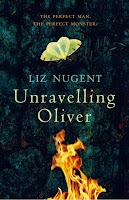
Unravelling Oliver, Liz Nugent
Liz Nugent’s Unravelling Oliver opens with Dublin-based writer Oliver Ryan viciously beating his wife Alice. The assault is described in the first person by Oliver himself, but Oliver’s is only one of a number of first-person accounts on offer here, each one a piece of the jigsaw that gradually assembles itself into portrait of a pathetic young boy who grew up to become a monster who writes best-selling children’s books. The reader is given no framing device relating to who might have collated the various accounts, or why, but the narrative gambit pays off handsomely. Oliver Ryan may be a vain, shallow and ultimately violent sociopath, but his story grows more compelling and nuanced the more we learn about him and the factors that influenced the man he would become, some of which were set in train even before he was born. More an investigation into psychology than a conventional crime thriller, Unravelling Oliver is a formidable debut and a deserved winner of this year’s crime fiction gong at the Irish Book Awards.
The Black Eyed Blonde, Benjamin Black
Benjamin Black (aka John Banville) resurrects Philip Marlowe again in The Black-Eyed Blonde, a novel that finds Marlowe still trying to come to terms with the events of The Long Goodbye. Indeed, the tone falls somewhere between the bitter defeatism of Chandler’s The Long Goodbye and that of Robert Altman’s 1973 film of the same name, a movie disliked by many Chandler fans for its portrayal of Marlowe as a hapless klutz who understands that he is, ultimately, powerless when trapped in a vice constructed of money and power. In The Black-Eyed Blonde, Black acknowledges the general thesis of Chandler’s novel, with Marlowe increasingly aware that he has outlived his time and his code, and wondering if he shouldn’t fold his tent in Los Angeles and move to Paris to become a rich woman’s husband. I liked it a lot, and I hope there’ll be more Marlowe novels from Benny Blanco.
Irène, Pierre Lamaitre
Pierre Lamaitre’s Alex (2013) garnered rave reviews last year, not least for the way Lamaitre reworked the tropes of the conventional serial killer novel to create a clever police procedural which worked as a superb thriller even as it confounded readers’ expectations of the genre. The follow-up, Irène, is equally clever, as the diminutive Parisian detective Camille Verhoeven is initially confronted with a murder scene so horrific it puts him in mind of Goya’s ‘Saturn Devouring his Son’. Were Verhoeven the son of an author rather than a painter, he might have recalibrated his instincts: it soon emerges that the carnage is a note-perfect homage to the double murder carried out by Patrick Bateman in Bret Easton Ellis’s American Psycho. Pitting his wits against a killer the media quickly dubs ‘The Novelist’, Verhoeven – who is distinctly unimpressed by the crime fiction genre – uncovers a series of murders which mirror killings detailed in classic crime novels by James Ellroy, John D. MacDonald and William McIlvanney. Just as the reader begins to suspect that the novel is a macabre compilation of the genre’s ‘greatest hits’, however, Lemaitre pulls a switch that forces the reader to reassess everything that has gone before. Translated by Frank Wynne, Irène builds on the considerable promise of Alex and confirms Camille Verhoeven as one of the most intriguing protagonists to emerge in the crime genre in recent years.
The Wolf in Winter, John Connolly
John Connolly blends his usual tropes of the classic private investigator and a gothic flavouring with a simmering rage at the way in which modern American treats its economically disenfranchised. The twelfth of John Connolly’s novels to feature the haunted private eye Charlie Parker, The Wolf in Winter begins with the disappearance of a homeless man, who was himself trying to track down his disappeared daughter. Parker’s investigations take him to the town of Prosperous, an ostensibly civilised and modern community, but one which harbours dark secrets inextricably bound up in its shadowy origins. Arguably the best Charlie Parker tale to date. (And while we’re on the subject of John Connolly, the collection of short stories called ‘Death Sentences’ edited by Otto Penzler includes John’s Anthony Award-winning short story ‘The Caxton Lending Library & Book Depository’).
The Boy That Never Was, Karen Perry
‘Karen Perry’ is a pseudonym for a new writing partnership composed of author Karen Gillece and poet Paul Perry. The story opens with a prologue set in Tangier in 2005, where the readers learns that one of the central protagonists, Harry, is guilty of negligence in the death, during an earthquake, of his young son Dillon. The story then moves to Dublin five years later, when Harry believes he sees his missing son during an anti-government demonstration on O’Connell Street. When he fails to convince the Gardai that Dillon is alive and well, Harry confesses all to his wife, Robin, which is when we start to realise that Harry has a history of obsession and instability, and that Robin also has secrets she needs to conceal. This is by no means the first time we’ve encountered the unreliable narrator – it’s a staple of the crime / mystery genre – but The Boy That Never Was goes one better by giving us a pair of devious narrators, neither of whom we can trust very much. The result is an impressive debut that is equally adept at blending thriller and mystery into an absorbing psychological study.
The Tailor of Panama, John le Carré
Not a book that was first published in 2014, of course, but the best book I read all year.
The Avenue of the Giants, Marc Dugain
Marc Dugain’s The Avenue of the Giants offers an unusual take on a genre tradition, that of the sociopathic serial killer. Set in California in the late 1960s and based on the life of Ed Kemper, aka ‘the Co-Ed Killer’ (whom Dugain acknowledges in his Author’s Note), the story switches between third- and first-person voices, as convicted killer Al Kenner writes an autobiographical account of a trail of destruction that began when, as a disaffected teenager, Kenner murdered his grandparents. It’s an unusual account, not least because Kenner claims that his literary influences include Dostoevsky and Raymond Carver, with the result that the story unfolds in a style of downbeat realism that grows increasingly unsettling and claustrophobic the more Kenner reveals of his prosaically literal mind-set. There are echoes of Jim Thompson’s The Killer Inside Me in Kenner’s ability to fool those closest to him with his gee-shucks public persona, which allows the charming but manipulative killer to exploit the virtues of peace and love espoused by his hippy victims.
The Silkworm, Robert Galbraith
Set in London during the bleak winter of 2010, The Silkworm is a sequel to The Cuckoo’s Calling, and again features the private detective and war veteran Cormoran Strike. Strike is intrigued when he is approached by Leonora Quine, who wants him to find her missing husband, the author and former enfant terrible, Owen Quine. Soon, however, Strike discovers that Quine has gone to ground because he has written a slanderous novel, titled Bombyx Mori – which translates as The Silkworm – in which vicious pen-portraits of his wife, editor, publisher, agent and peers are easily identifiable to anyone in the publishing industry. It’s a fine sequel; if Robert Galbraith / JK Rowling is in the crime-writing game for the long haul, this reader will be very pleased indeed.
Young Philby, Robert Littell
The exploits of Adrian Russell ‘Kim’ Philby have been picked over many times, but Robert Littell’s Young Philby takes an intriguing approach to exploring the motivations of the notorious British spy, who defected to the Soviet Union when his cover was finally blown in 1963. The novel begins with a Prologue in 1938, with a Russian ‘handler’ of Philby being interrogated in a Moscow prison, before going back to 1933, and Philby’s arrival in Vienna as Fascism begins to take hold in Austria. Essentially a series of portraits of Philby offered by those he worked with, the story comprises fictionalised encounters between, among others, Philby and his first wife Litzi Friedman, Guy Burgess, Teodor Maly, who first recruited Philby in London, and Evelyn Sinclair, the secretary who recorded conversations at the heart of the British secret service. This last account is the most fascinating of a beautifully detailed mosaic, offering as it does a revolutionary theory on Philby’s career and activities. In re-imagining one of the most familiar figures of the Cold War landscape, Robert Littell has given us a spy thriller of the very highest order.
Perfidia, James Ellroy
Some readers, myself included, might have preferred to meet James Ellroy’s iconic characters in a state of grace, in order to better appreciate their fall. It wasn’t to be, but Perfidia was still one of the best crime novels of the year. It opens in Los Angeles in December 1941, with young LAPD detective Dudley Smith investigating what appears to be a ritual suicide by a Japanese-American family. Expecting a quick result, Smith is confounded with the Japanese navy bombs Pearl Harbour and turns his open-and-shut case into a political time-bomb. Dense, incident-packed, irreverent and intense, it is – for good or ill – vintage Ellroy.
The Surfacing, Cormac James
Cork author Cormac James’ second novel begins in the Arctic Circle in 1850, when we find ourselves aboard the stout ship The Impetus, under the command of Captain Myers and his second-in-command Lieutenant Morgan, as they go in search of the Franklin expedition, which went missing some years previously during a bid to discover the fabled Northwest Passage. The all-male environment aboard The Impetus – now trapped in the shifting ice – is disrupted by a stowaway, Kitty, who is pregnant with Morgan’s child. It’s a fabulously detailed tale, both in its historical research and its depiction of the savagely harsh landscape, but despite the apparent ‘Boys’ Adventure’ nature of the tale, it’s very much a tender, intimate novel about one man’s horror and joy and the prospect of becoming a father. The announcement two months ago by the Canadian government that they had located the wrecks of the Franklin Expedition puts the efforts of the characters here into some perspective, and amplifies the magnificent futility of their epic journey. Superb.
The Monogram Murders, Sophie Hannah
Sophie Hannah ‘resurrects’ Agatha Christie’s detective Hercule Poirot for The Monogram Murders, which is set in 1929. When a terrified young woman called Jennie blunders into a London coffee shop and sits at Poirot’s table, however, his famous little grey cells are energised by Jennie’s bizarre story of her impending murder – and her assertion that nothing must be done to stop it, because only then will justice be done. Enter Edward Catchpool of Scotland Yard, a police detective who stands in for Poirot’s regular sounding-board Arthur Hastings, to narrate the story of Poirot’s latest investigation. It centres on a triple killing at the Bloxham Hotel, in which two women and a man are discovered identically murdered in three separate rooms, each with a monogrammed cufflink in their mouths. Sophie Hannah provides a double function in The Monogram Murders: The story is told in Agatha Christie’s style, but it also partly serves as a critique of Christie’s style and methods. ‘I must say,’ Catchpool observes, ‘I did not and never would understand why he required such a sizeable audience. It was not a theatrical production. When I solved a crime … I simply presented my conclusions to my boss and then arrested the miscreant in question.’ All told, it’s a terrific piece of literary ventriloquism.
Us, David Nicholls
Us is David Nicholls’ fourth novel, and probably his most entertaining. As the story begins, Douglas Petersen appears to be suffering the reverse of the conventional male mid-life crisis. A pedantic biochemist contemplating the imminent departure of his teenage son Albie from the family nest, Douglas is – according to the rules of fiction, at least – a prime candidate to be eyeing up a Maserati and tumbling into an ill-advised affair with a woman half his age. As it happens, Douglas rather likes bumbling along in his comfortable, suburban existence, and is very much looking forward to ‘growing old and dying together’ with his wife, Connie. “Douglas,” says Connie, “who in their right mind would look forward to that?” The truth of it is that, now their son is reared and on his way to university, Connie is thinking of leaving Douglas. With a typically old-fashioned ‘grand tour’ of Europe’s galleries and museums already planned, Douglas hopes that the family’s final holiday together will reignite old passions for love, art and life itself – but once they get on the road, things very quickly go from bad to worse. Us is very much an escape, a laugh, a comfort and a thrill, but it is above all a thought-provoking meditation on how very fragile are the ties that bind.
The Burning Room, Michael Connelly
The shot was fired a decade ago but Orlando Merced, a mariachi band member, has only now succumbed to his injuries, which means Harry Bosch has a very unusual ‘open-unsolved’ (aka ‘cold case’) investigation to pursue in The Burning Room, Michael Connelly’s 17th novel to feature the veteran LAPD detective. Bosch, already on borrowed time as a working detective courtesy of the DROP programme, is less than a year from retirement as the story opens, but he has lost none of his edge. What appears at first glance to be a depressingly routine drive-by shooting develops, largely due to Bosch’s instincts, into a complex tale of jealousy, arson, robbery and politically motivated murder, as Connelly, in a story that wears its Raymond Chandler influences lightly, links the street-level crimes of Los Angeles with the city’s highest seats of power. Bosch, teamed here with impressive new recruit Lucy Soto, goes about his work with the same quality of unobtrusive directness that Connelly brings to his prose, the deceptively understated approach disguising a pacy, powerful investigation that yields results when least expected.
Tabula Rasa, Ruth Downie
Set in Roman Britain as the natives’ festival of Samain approaches, Tabula Rasa is Ruth Downie’s sixth novel to feature medicus Gaius Petreius Ruso, who is currently serving with the Twentieth Legion as they build Hadrian’s Wall. When rumours begin to circulate that a dead body has been dumped under the rubble packed into the wall, and the young boy responsible for circulating the rumour goes missing, the already tense relationship between the Romans and the native Britons erupts into hostilities. Ruso’s investigation, which he hopes will defuse the situation, is deftly crafted by Downie, but Tabula Rasa offers far more than the mystery genre’s conventions transplanted to Roman-era Britain. Equally fascinating are the contemporary parallels to be found in the Roman experience of conquering and occupying a foreign territory: their ignorance of the local language and customs, the blinkered arrogance of military power, and the nerve-shredding presence of constant threat.
So there it is. It’s a busy-busy time right now around CAP Towers, so if you don’t hear from us between now and the holidays, have a terrific Christmas and a peaceful and prosperous New Year. See you on the other side …
Blue is the Night, Eoin McNamee
Blue is the Night is the final novel in a loose trilogy that began in 2001 with The Blue Tango (which was longlisted for the Booker Prize) and continued with Orchid Blue in 2010. The trilogy is woven around Sir Lancelot Curran, whose career took him from lawyer to judge and on to Attorney General and Member of Parliament, but Blue is the Night investigates the brutal murder of Curran’s daughter, Patricia, outside their home in Whiteabbey in 1952. It focuses on Lance Curran’s wife, Doris, and his right-hand man and political fixer, Harry Ferguson. The book is by no means a straightforward crime fiction investigation, however: on one level the novel is about the timelessness of evil and how it reappears in different guises in all cultures throughout history. McNamee refers to the ‘ancient malice’ represented by the mummy Takabuti that Ferguson sees in a Belfast museum, and the novel also stretches back in time to late Victorian London, and Jack the Ripper. It’s a superb novel in its own right, but also a terrific conclusion to the ‘Blue trilogy’, in which McNamee explores the concept of noir as being a kind of Calvinist idea of pre-determination – that what happens to you is destined to happen, that there’s a hand on the scales and all you can do is rage against it.
The Missing File, DA Mishani
Set in the small Israeli city of Holon on the outskirts of Tel Aviv, D.A. Mishani’s debut The Missing File begins with the mother of a young boy reporting his disappearance to Inspector Avraham Avraham. Perplexed but initially unconcerned – children are never kidnapped or killed in Israel, Avraham tells us – the inspector only belatedly swings into action, by which time the reader has already encountered the boy’s sinister neighbour, Ze’ev, an English teacher and frustrated author who craves the inspiration that will spark his writing to life. D.A. Mishani is a crime writer and scholar in his native Israel, and here he blends a subversive take on the standard police procedural with ruminations on the crime novel itself, cross-referencing the work of Agatha Christie and Stieg Larsson with that of Kafka and Dostoevsky, and advancing Avraham’s theory as to why there are no detective novels in Hebrew. The well-meaning but hapless Avraham is a delightful creation, particularly as Steven Cohen’s translation is strewn with Avraham’s humorously morose observations on the human condition. With its finely crafted plot constantly confounding expectations, The Missing File marks D.A Mishani out as a writer to watch.
Unravelling Oliver, Liz Nugent
Liz Nugent’s Unravelling Oliver opens with Dublin-based writer Oliver Ryan viciously beating his wife Alice. The assault is described in the first person by Oliver himself, but Oliver’s is only one of a number of first-person accounts on offer here, each one a piece of the jigsaw that gradually assembles itself into portrait of a pathetic young boy who grew up to become a monster who writes best-selling children’s books. The reader is given no framing device relating to who might have collated the various accounts, or why, but the narrative gambit pays off handsomely. Oliver Ryan may be a vain, shallow and ultimately violent sociopath, but his story grows more compelling and nuanced the more we learn about him and the factors that influenced the man he would become, some of which were set in train even before he was born. More an investigation into psychology than a conventional crime thriller, Unravelling Oliver is a formidable debut and a deserved winner of this year’s crime fiction gong at the Irish Book Awards.
The Black Eyed Blonde, Benjamin Black
Benjamin Black (aka John Banville) resurrects Philip Marlowe again in The Black-Eyed Blonde, a novel that finds Marlowe still trying to come to terms with the events of The Long Goodbye. Indeed, the tone falls somewhere between the bitter defeatism of Chandler’s The Long Goodbye and that of Robert Altman’s 1973 film of the same name, a movie disliked by many Chandler fans for its portrayal of Marlowe as a hapless klutz who understands that he is, ultimately, powerless when trapped in a vice constructed of money and power. In The Black-Eyed Blonde, Black acknowledges the general thesis of Chandler’s novel, with Marlowe increasingly aware that he has outlived his time and his code, and wondering if he shouldn’t fold his tent in Los Angeles and move to Paris to become a rich woman’s husband. I liked it a lot, and I hope there’ll be more Marlowe novels from Benny Blanco.
Irène, Pierre Lamaitre
Pierre Lamaitre’s Alex (2013) garnered rave reviews last year, not least for the way Lamaitre reworked the tropes of the conventional serial killer novel to create a clever police procedural which worked as a superb thriller even as it confounded readers’ expectations of the genre. The follow-up, Irène, is equally clever, as the diminutive Parisian detective Camille Verhoeven is initially confronted with a murder scene so horrific it puts him in mind of Goya’s ‘Saturn Devouring his Son’. Were Verhoeven the son of an author rather than a painter, he might have recalibrated his instincts: it soon emerges that the carnage is a note-perfect homage to the double murder carried out by Patrick Bateman in Bret Easton Ellis’s American Psycho. Pitting his wits against a killer the media quickly dubs ‘The Novelist’, Verhoeven – who is distinctly unimpressed by the crime fiction genre – uncovers a series of murders which mirror killings detailed in classic crime novels by James Ellroy, John D. MacDonald and William McIlvanney. Just as the reader begins to suspect that the novel is a macabre compilation of the genre’s ‘greatest hits’, however, Lemaitre pulls a switch that forces the reader to reassess everything that has gone before. Translated by Frank Wynne, Irène builds on the considerable promise of Alex and confirms Camille Verhoeven as one of the most intriguing protagonists to emerge in the crime genre in recent years.
The Wolf in Winter, John Connolly
John Connolly blends his usual tropes of the classic private investigator and a gothic flavouring with a simmering rage at the way in which modern American treats its economically disenfranchised. The twelfth of John Connolly’s novels to feature the haunted private eye Charlie Parker, The Wolf in Winter begins with the disappearance of a homeless man, who was himself trying to track down his disappeared daughter. Parker’s investigations take him to the town of Prosperous, an ostensibly civilised and modern community, but one which harbours dark secrets inextricably bound up in its shadowy origins. Arguably the best Charlie Parker tale to date. (And while we’re on the subject of John Connolly, the collection of short stories called ‘Death Sentences’ edited by Otto Penzler includes John’s Anthony Award-winning short story ‘The Caxton Lending Library & Book Depository’).
The Boy That Never Was, Karen Perry
‘Karen Perry’ is a pseudonym for a new writing partnership composed of author Karen Gillece and poet Paul Perry. The story opens with a prologue set in Tangier in 2005, where the readers learns that one of the central protagonists, Harry, is guilty of negligence in the death, during an earthquake, of his young son Dillon. The story then moves to Dublin five years later, when Harry believes he sees his missing son during an anti-government demonstration on O’Connell Street. When he fails to convince the Gardai that Dillon is alive and well, Harry confesses all to his wife, Robin, which is when we start to realise that Harry has a history of obsession and instability, and that Robin also has secrets she needs to conceal. This is by no means the first time we’ve encountered the unreliable narrator – it’s a staple of the crime / mystery genre – but The Boy That Never Was goes one better by giving us a pair of devious narrators, neither of whom we can trust very much. The result is an impressive debut that is equally adept at blending thriller and mystery into an absorbing psychological study.
The Tailor of Panama, John le Carré
Not a book that was first published in 2014, of course, but the best book I read all year.
The Avenue of the Giants, Marc Dugain
Marc Dugain’s The Avenue of the Giants offers an unusual take on a genre tradition, that of the sociopathic serial killer. Set in California in the late 1960s and based on the life of Ed Kemper, aka ‘the Co-Ed Killer’ (whom Dugain acknowledges in his Author’s Note), the story switches between third- and first-person voices, as convicted killer Al Kenner writes an autobiographical account of a trail of destruction that began when, as a disaffected teenager, Kenner murdered his grandparents. It’s an unusual account, not least because Kenner claims that his literary influences include Dostoevsky and Raymond Carver, with the result that the story unfolds in a style of downbeat realism that grows increasingly unsettling and claustrophobic the more Kenner reveals of his prosaically literal mind-set. There are echoes of Jim Thompson’s The Killer Inside Me in Kenner’s ability to fool those closest to him with his gee-shucks public persona, which allows the charming but manipulative killer to exploit the virtues of peace and love espoused by his hippy victims.
The Silkworm, Robert Galbraith
Set in London during the bleak winter of 2010, The Silkworm is a sequel to The Cuckoo’s Calling, and again features the private detective and war veteran Cormoran Strike. Strike is intrigued when he is approached by Leonora Quine, who wants him to find her missing husband, the author and former enfant terrible, Owen Quine. Soon, however, Strike discovers that Quine has gone to ground because he has written a slanderous novel, titled Bombyx Mori – which translates as The Silkworm – in which vicious pen-portraits of his wife, editor, publisher, agent and peers are easily identifiable to anyone in the publishing industry. It’s a fine sequel; if Robert Galbraith / JK Rowling is in the crime-writing game for the long haul, this reader will be very pleased indeed.
Young Philby, Robert Littell
The exploits of Adrian Russell ‘Kim’ Philby have been picked over many times, but Robert Littell’s Young Philby takes an intriguing approach to exploring the motivations of the notorious British spy, who defected to the Soviet Union when his cover was finally blown in 1963. The novel begins with a Prologue in 1938, with a Russian ‘handler’ of Philby being interrogated in a Moscow prison, before going back to 1933, and Philby’s arrival in Vienna as Fascism begins to take hold in Austria. Essentially a series of portraits of Philby offered by those he worked with, the story comprises fictionalised encounters between, among others, Philby and his first wife Litzi Friedman, Guy Burgess, Teodor Maly, who first recruited Philby in London, and Evelyn Sinclair, the secretary who recorded conversations at the heart of the British secret service. This last account is the most fascinating of a beautifully detailed mosaic, offering as it does a revolutionary theory on Philby’s career and activities. In re-imagining one of the most familiar figures of the Cold War landscape, Robert Littell has given us a spy thriller of the very highest order.
Perfidia, James Ellroy
Some readers, myself included, might have preferred to meet James Ellroy’s iconic characters in a state of grace, in order to better appreciate their fall. It wasn’t to be, but Perfidia was still one of the best crime novels of the year. It opens in Los Angeles in December 1941, with young LAPD detective Dudley Smith investigating what appears to be a ritual suicide by a Japanese-American family. Expecting a quick result, Smith is confounded with the Japanese navy bombs Pearl Harbour and turns his open-and-shut case into a political time-bomb. Dense, incident-packed, irreverent and intense, it is – for good or ill – vintage Ellroy.
The Surfacing, Cormac James
Cork author Cormac James’ second novel begins in the Arctic Circle in 1850, when we find ourselves aboard the stout ship The Impetus, under the command of Captain Myers and his second-in-command Lieutenant Morgan, as they go in search of the Franklin expedition, which went missing some years previously during a bid to discover the fabled Northwest Passage. The all-male environment aboard The Impetus – now trapped in the shifting ice – is disrupted by a stowaway, Kitty, who is pregnant with Morgan’s child. It’s a fabulously detailed tale, both in its historical research and its depiction of the savagely harsh landscape, but despite the apparent ‘Boys’ Adventure’ nature of the tale, it’s very much a tender, intimate novel about one man’s horror and joy and the prospect of becoming a father. The announcement two months ago by the Canadian government that they had located the wrecks of the Franklin Expedition puts the efforts of the characters here into some perspective, and amplifies the magnificent futility of their epic journey. Superb.
The Monogram Murders, Sophie Hannah
Sophie Hannah ‘resurrects’ Agatha Christie’s detective Hercule Poirot for The Monogram Murders, which is set in 1929. When a terrified young woman called Jennie blunders into a London coffee shop and sits at Poirot’s table, however, his famous little grey cells are energised by Jennie’s bizarre story of her impending murder – and her assertion that nothing must be done to stop it, because only then will justice be done. Enter Edward Catchpool of Scotland Yard, a police detective who stands in for Poirot’s regular sounding-board Arthur Hastings, to narrate the story of Poirot’s latest investigation. It centres on a triple killing at the Bloxham Hotel, in which two women and a man are discovered identically murdered in three separate rooms, each with a monogrammed cufflink in their mouths. Sophie Hannah provides a double function in The Monogram Murders: The story is told in Agatha Christie’s style, but it also partly serves as a critique of Christie’s style and methods. ‘I must say,’ Catchpool observes, ‘I did not and never would understand why he required such a sizeable audience. It was not a theatrical production. When I solved a crime … I simply presented my conclusions to my boss and then arrested the miscreant in question.’ All told, it’s a terrific piece of literary ventriloquism.
Us, David Nicholls
Us is David Nicholls’ fourth novel, and probably his most entertaining. As the story begins, Douglas Petersen appears to be suffering the reverse of the conventional male mid-life crisis. A pedantic biochemist contemplating the imminent departure of his teenage son Albie from the family nest, Douglas is – according to the rules of fiction, at least – a prime candidate to be eyeing up a Maserati and tumbling into an ill-advised affair with a woman half his age. As it happens, Douglas rather likes bumbling along in his comfortable, suburban existence, and is very much looking forward to ‘growing old and dying together’ with his wife, Connie. “Douglas,” says Connie, “who in their right mind would look forward to that?” The truth of it is that, now their son is reared and on his way to university, Connie is thinking of leaving Douglas. With a typically old-fashioned ‘grand tour’ of Europe’s galleries and museums already planned, Douglas hopes that the family’s final holiday together will reignite old passions for love, art and life itself – but once they get on the road, things very quickly go from bad to worse. Us is very much an escape, a laugh, a comfort and a thrill, but it is above all a thought-provoking meditation on how very fragile are the ties that bind.
The Burning Room, Michael Connelly
The shot was fired a decade ago but Orlando Merced, a mariachi band member, has only now succumbed to his injuries, which means Harry Bosch has a very unusual ‘open-unsolved’ (aka ‘cold case’) investigation to pursue in The Burning Room, Michael Connelly’s 17th novel to feature the veteran LAPD detective. Bosch, already on borrowed time as a working detective courtesy of the DROP programme, is less than a year from retirement as the story opens, but he has lost none of his edge. What appears at first glance to be a depressingly routine drive-by shooting develops, largely due to Bosch’s instincts, into a complex tale of jealousy, arson, robbery and politically motivated murder, as Connelly, in a story that wears its Raymond Chandler influences lightly, links the street-level crimes of Los Angeles with the city’s highest seats of power. Bosch, teamed here with impressive new recruit Lucy Soto, goes about his work with the same quality of unobtrusive directness that Connelly brings to his prose, the deceptively understated approach disguising a pacy, powerful investigation that yields results when least expected.
Tabula Rasa, Ruth Downie
Set in Roman Britain as the natives’ festival of Samain approaches, Tabula Rasa is Ruth Downie’s sixth novel to feature medicus Gaius Petreius Ruso, who is currently serving with the Twentieth Legion as they build Hadrian’s Wall. When rumours begin to circulate that a dead body has been dumped under the rubble packed into the wall, and the young boy responsible for circulating the rumour goes missing, the already tense relationship between the Romans and the native Britons erupts into hostilities. Ruso’s investigation, which he hopes will defuse the situation, is deftly crafted by Downie, but Tabula Rasa offers far more than the mystery genre’s conventions transplanted to Roman-era Britain. Equally fascinating are the contemporary parallels to be found in the Roman experience of conquering and occupying a foreign territory: their ignorance of the local language and customs, the blinkered arrogance of military power, and the nerve-shredding presence of constant threat.
So there it is. It’s a busy-busy time right now around CAP Towers, so if you don’t hear from us between now and the holidays, have a terrific Christmas and a peaceful and prosperous New Year. See you on the other side …
Event: The Hodges Figgis Book Festival
I’ve always been very fond of the Hodges Figgis bookstore on Dublin’s Dawson Street, which is currently hosting its own book festival (it runs from September 10th to 19th). The event that caught my eye, and which I’m hoping to get to, is the crime fiction night on Thursday 17th, when John Connolly will host a conversation between some of the most impressive talents of the new wave of Irish crime fiction, said talents being Karen Perry, Jane Casey, Alex Barclay, Liz Nugent and Sinead Crowley.
It won’t have escaped your notice that, with the exception of the Paul Perry half of the ‘Karen Perry’ writing partnership, all those writers are women. Whether by accident or design, the Hodges Figgis event is certainly a timely one in that it celebrates the fact that female writers are very much to the fore in Irish crime writing these days. There have always been terrific women writers in terms of Irish crime fiction, among them Julie Parsons, Ruth Dudley Edwards, Ingrid Black, Cora Harrison, Erin Hart, Tana French, Niamh O’Connor and Arlene Hunt, but in the last couple of years women have come to dominate the scene, not least in terms of winning the crime fiction prize at the Irish Book Awards (Louise Phillips and Liz Nugent have won the last two awards); and this year alone we’ve seen debuts from Andrea Carter, Jax Miller, Sheena Lambert, Anna Sweeney and Kelly Creighton.
I don’t have any theory as to why this might be the case (“Wot!?” I hear you gasp – “No theory?”), but if there is any underlying reason(s) for the trend, there’s no better man than John Connolly to winkle it/them out. The event takes place at Hodges Figgis, Dawson Street, Dublin 2, on Thursday 17th September, at 6.30pm. The event is free, and no booking is required.
It won’t have escaped your notice that, with the exception of the Paul Perry half of the ‘Karen Perry’ writing partnership, all those writers are women. Whether by accident or design, the Hodges Figgis event is certainly a timely one in that it celebrates the fact that female writers are very much to the fore in Irish crime writing these days. There have always been terrific women writers in terms of Irish crime fiction, among them Julie Parsons, Ruth Dudley Edwards, Ingrid Black, Cora Harrison, Erin Hart, Tana French, Niamh O’Connor and Arlene Hunt, but in the last couple of years women have come to dominate the scene, not least in terms of winning the crime fiction prize at the Irish Book Awards (Louise Phillips and Liz Nugent have won the last two awards); and this year alone we’ve seen debuts from Andrea Carter, Jax Miller, Sheena Lambert, Anna Sweeney and Kelly Creighton.
I don’t have any theory as to why this might be the case (“Wot!?” I hear you gasp – “No theory?”), but if there is any underlying reason(s) for the trend, there’s no better man than John Connolly to winkle it/them out. The event takes place at Hodges Figgis, Dawson Street, Dublin 2, on Thursday 17th September, at 6.30pm. The event is free, and no booking is required.
Monday
Oliver’s Twist
An Irish crime fiction debut to watch for this year is Liz Nugent’s UNRAVELLING OLIVER (Penguin Ireland), which is billed as ‘a gripping novel of psychological suspense’. Quoth the blurb elves:
‘I expected more of a reaction the first time I hit her.’UNRAVELLING OLIVER arrives in early March. For all the details, clickety-click here …
Oliver Ryan is a handsome and charismatic success story. He lives in the leafy suburbs with his wife, Alice, who illustrates his award-winning children’s books and gives him her unstinting devotion. Their life together is one of enviable privilege and ease - enviable until, one evening after supper, Oliver attacks Alice and puts her into a coma.
In the aftermath, as everyone tries to make sense of his astonishing act of savagery, Oliver tells his story. So do those whose paths he has crossed over five decades. What unfolds is a story of shame, envy, breath-taking deception and masterful manipulation.
Only Oliver knows the lengths to which he has had to go to get the life to which he felt entitled. But even he is in for a shock when the past catches up with him.
Liz Nugent’s gripping novel of psychological suspense, UNRAVELLING OLIVER, is a complex and elegant study of the making of a sociopath in the tradition of Barbara Vine and Patricia Highsmith.
Wednesday
The Irish Crime Fiction Novel of the Year 2019
Hearty congrats to Liz Nugent, who scored an impressive double whammy last night in winning the IBAS Irish Crime Fiction Novel of the Year for SKIN DEEP (Penguin), and also the Ryan Tubridy Show Listeners’ Choice Award. Nicely done, ma’am.
Commiserations to all the contenders in both categories; if it’s any consolation, you were up against a veritable force of nature in Liz Nugent.
For all the details of the winners in all categories, clickety-click here …
Commiserations to all the contenders in both categories; if it’s any consolation, you were up against a veritable force of nature in Liz Nugent.
For all the details of the winners in all categories, clickety-click here …
Monday
Shortlist: Irish Crime Fiction Book of the Year
It’s that time of the year again, when the shortlists for the Irish Books of the Year awards are announced, and as always the Crime Fiction category offers some fascinating choices. To wit:
Irish Independent Crime Fiction Book of the YearMeanwhile, there’s five crime titles in the six nominees for the Ryan Tubridy Listener’s Choice Award. To wit:
Skin Deep – Liz Nugent (Penguin Ireland)
A House of Ghosts – W. C. Ryan (Bonnier Zaffre)
The Confession – Jo Spain (Quercus)
One Click – Andrea Mara (Poolbeg)
The Ruin – Dervla McTiernan (Sphere)
Thirteen – Steve Cavanagh (Orion)
RTE Radio One’s The Ryan Tubridy Show Listeners’ Choice AwardHearty congratulations to all the nominees; the winners will be announced on November 27th. To vote for your favourite title, clickety-click here …
Ladder to the Sky – John Boyne (Doubleday)
The Stolen Girls – Patricia Gibney (Bookouture)
The President is Missing – Bill Clinton and James Patterson (Century)
Ruin – Dervla McTiernan (Sphere)
Skin Deep – Liz Nugent (Penguin Ireland)
The Woman in the Window – A.J. Finn (HarperCollins)
Tuesday
Festival: Festival du Polar Irlandais Noire Emeraude
It’s off with a host of Irish crime writers to Paris and the Irish Cultural Centre for the weekend, and the Festival du Polar Irlandais Noire Emeraude, which loosely translates as the ‘Emerald Black Irish Crime Festival’. To wit:
Wednesday 19 September, 7.30 pmFor all the details, clickety-click here …
OPENING EVENING
Benjamin Black (John Banville) in conversation with Clíona Ní Ríordáin
Born in Ireland in 1945, John Banville lives in Dublin. Since its inception, the work of this "goldsmith of words" has been rewarded with numerous literary prizes. Passionate about police literature of the 50s, he also wrote black novels under the pseudonym Benjamin Black, the last appeared Vengeance (2017); their recurring hero, coroner Quirke, was portrayed by Gabriel Byrne in a television series aired in 2014 on the BBC.
Thursday, September 20th, 7:30 pm
DETECTIVES AND CRIMINALS FROM PAGE TO SCREEN
Jo Spain in conversation with director Conor Horgan
The Irish novelist of crime fiction, Jo Spain, recently commissioned to write her first TV drama for RTÉ, will tell us about the difficulties of moving from writing novels to that of scenarios. Produced this summer by the directors of the hit Irish series Love / Hate, her Taken Down series is released on screen in November 2018.
Friday, September 21, 7:30 pm
SCENE OF THE CRIME
Alex Barclay and Declan Hughes in conversation with Declan Burke
Scene of the Crime will focus on Ireland as a backdrop for crime fiction and what is so revealed about contemporary society. Alex Barclay and Declan Hughes will also tell us about their experience when locating a plot in a foreign country, their motivations, the constraints that entails and the strengths that this narrative choice represents.
Saturday, September 22nd, 5pm
WHYDUNIT
Liz Nugent, Jane Casey and Declan Burke in conversation with Declan Hughes
Whydunit will examine the alternatives to the traditional black novel focusing in particular on the psychological drama as well as on the band police officer.
Liz Nugent, Jane Casey and Declan Burke will give us keys to understanding this form of crime novel that focuses more on the motivations of the character who committed a crime than on the murderer.
Saturday, September 22, 7:30 pm
TRUE CRIME
Eoin McNamee, Niamh O'Connor, Sam Bungey and Jennifer Forde in conversation with Wesley Hutchinson
Sam Bungey and Jennifer Forde are the creators of West Cork, a podcast produced by Audible, dealing with the murder of Frenchwoman Sophie Toscan de Plantier in the West Cork area. With Niamh O'Connor and Eoin McNamee, they will discuss the ethics of novel based on a real news story.
Saturday
Event: The ‘Something Wicked’ Crime Fiction Festival at Malahide
Something Wicked, Ireland’s only standalone crime fiction festival, takes place this year from October 28th – 30th, featuring Alex Barclay, Liz Nugent, Arlene Hunt, René Gapert, Dave Rudden and Sam Blake. Quoth the blurb elves:
Murder comes to Malahide on the October bank holiday weekend in the form of the Something Wicked Crime Writing Festival, which runs from Friday 28th to Sunday 30th. Over the course of the three days, there will be something for all ages interested in crime, crime fiction and children’s books.For all the details, clickety-click here.
On Friday October 28th a panel of bestselling authors will discuss how they write about murder and violent crime. The panellists are Alex Barclay (Darkhouse, Blood Runs Cold), Sam Blake (Little Bones) and Liz Nugent (Unravelling Oliver, Lying in Wait) and will be hosted by Bert Wright (Administrator of the Bord Gais Energy Irish Book Awards). The event will be held at Malahide Lawn Tennis Club at 7:30pm. Tickets €12.50*/€15 (*early bird)
‘Malahide Murder Morning’ takes place on Saturday Oct 29th. This is a forensics and crime scene workshop where participants will witness the procedures and protocols following the discovery of a dead body. They will also learn how to write authentic crime fiction. The workshop will be led by Forensic Anthropologist René Gapert, Deputy State Pathologist Linda Mulligan and Garda Vanessa Stafford, with actor and screen writer Paddy C. Courtney acting as host. Award winning crime novelist Arlene Hunt (Vicious Circle, The Chosen, The Outsider) will complete the line-up, as she discusses how to incorporate the panellists’ information into a crime novel. The three-hour workshop takes place in the Malahide Parish Centre at 10am. Tickets €20*/€25 (*early bird)
Manor Books on Church Road will be the venue for ‘Killer Kids’ at 11am on Sunday October 30th. Bestselling author Dave Rudden (Knights of the Borrowed Dark) will host a workshop for children, who will learn the art of storytelling through the medium of crime fiction. Tickets €5.
The St. Patrick’s Day Massacre
Given that it’s the St. Patrick’s Day weekend, I thought I’d run a quick round-up of some interesting Irish crime fiction novels, aka ‘Emerald Noir’, that have appeared on ye olde blogge so far in 2014. It runs a lot like this:
THE BLACK-EYED BLONDE by Benjamin Black, aka the new Philip Marlowe novel.
UNRAVELLING OLIVER by Liz Nugent, an intriguing debut from an impressive new voice.
SLEEPING DOGS by Mark O’Sullivan, a sequel to one of the more interesting debuts I read last year.
THE RAGE by Gene Kerrigan, which was recently shortlisted in the LA Times’ Book Awards crime / mystery category.
BLUE IS THE NIGHT by Eoin McNamee, a superb novel which concludes his ‘Blue’ trilogy.
IN THE ROSARY GARDEN by Nicola White, another excellent debut.
HARM’S REACH by Alex Barclay, the latest in the Ren Bryce series, which I’ve been enjoying hugely.
THE FINAL SILENCE by Stuart Neville, the third novel to feature DI Jack Lennon.
KILMOON by Lisa Alber, a debut written by an American author and set in Ireland.
DEADLY INTENT by Anna Sweeney, which is to the best of my knowledge the first Irish crime novel translated from the Irish language.
THE WOLF IN WINTER by John Connolly, which is the latest Charlie Parker novel, and hotly anticipated it is too.
IN THE MORNING I’LL BE GONE by Adrian McKinty, which concludes his excellent Sean Duffy trilogy.
CAN ANYONE HELP ME? by Sinead Crowley, a forthcoming debut already attracting plenty of strong advance buzz.
So there you have it – just some of the highlights from the last couple of months on Crime Always Pays. If you’re looking for another author, just type in the name in the search engine on the top left of the page, and off you go. Oh, and a very happy St. Patrick’s day to you, wherever you may be in the world …
THE BLACK-EYED BLONDE by Benjamin Black, aka the new Philip Marlowe novel.
UNRAVELLING OLIVER by Liz Nugent, an intriguing debut from an impressive new voice.
SLEEPING DOGS by Mark O’Sullivan, a sequel to one of the more interesting debuts I read last year.
THE RAGE by Gene Kerrigan, which was recently shortlisted in the LA Times’ Book Awards crime / mystery category.
BLUE IS THE NIGHT by Eoin McNamee, a superb novel which concludes his ‘Blue’ trilogy.
IN THE ROSARY GARDEN by Nicola White, another excellent debut.
HARM’S REACH by Alex Barclay, the latest in the Ren Bryce series, which I’ve been enjoying hugely.
THE FINAL SILENCE by Stuart Neville, the third novel to feature DI Jack Lennon.
KILMOON by Lisa Alber, a debut written by an American author and set in Ireland.
DEADLY INTENT by Anna Sweeney, which is to the best of my knowledge the first Irish crime novel translated from the Irish language.
THE WOLF IN WINTER by John Connolly, which is the latest Charlie Parker novel, and hotly anticipated it is too.
IN THE MORNING I’LL BE GONE by Adrian McKinty, which concludes his excellent Sean Duffy trilogy.
CAN ANYONE HELP ME? by Sinead Crowley, a forthcoming debut already attracting plenty of strong advance buzz.
So there you have it – just some of the highlights from the last couple of months on Crime Always Pays. If you’re looking for another author, just type in the name in the search engine on the top left of the page, and off you go. Oh, and a very happy St. Patrick’s day to you, wherever you may be in the world …
Monday
News: Irish Crime Writing at Mountains To Sea
The Mountains to Sea literary festival takes place this year from Thursday 11th to Sunday 14th of September, and as always it’s something of a smorgasbord. I’m delighted to see that there’s a very strong Irish crime writing presence lined up, three of whom are debutants.
Lee Child , interviewed by the inimitable Declan Hughes, leads the charge. Lee, who claims his Irishness under a variation on FIFA’s ‘grandparent rule’, will also have a short story in the BELFAST NOIR (Akashic Books) anthology later this year. Elsewhere, the line-up includes Sinead Crowley (CAN ANYBODY HELP ME?), Karen Perry (THE BOY THAT NEVER WAS), Liz Nugent (UNRAVELLING OLIVER) and Jane Casey (THE KILL). In addition to her appearance at the festival, Jane Casey will also host a writing workshop.
For all the details on the Mountains to Sea programme, and how to book tickets, clickety-click here …
Lee Child , interviewed by the inimitable Declan Hughes, leads the charge. Lee, who claims his Irishness under a variation on FIFA’s ‘grandparent rule’, will also have a short story in the BELFAST NOIR (Akashic Books) anthology later this year. Elsewhere, the line-up includes Sinead Crowley (CAN ANYBODY HELP ME?), Karen Perry (THE BOY THAT NEVER WAS), Liz Nugent (UNRAVELLING OLIVER) and Jane Casey (THE KILL). In addition to her appearance at the festival, Jane Casey will also host a writing workshop.
For all the details on the Mountains to Sea programme, and how to book tickets, clickety-click here …
Wednesday
Subscribe to:
Posts (Atom)


