Liz Nugent’s Unravelling Oliver (Penguin Ireland, €14.99) opens with Dublin-based writer Oliver Ryan viciously beating his wife Alice. The assault is described in the first person by Oliver himself, but Oliver’s is only one of a number of first-person accounts on offer here, each one a piece of the jigsaw that gradually assembles itself into portrait of a pathetic young boy who grew up to become a monster who writes best-selling children’s books. The reader is given no framing device relating to who might have collated the various accounts, or why, but the narrative gambit pays off handsomely. Oliver Ryan may be a vain, shallow and ultimately violent sociopath, but his story grows more compelling and nuanced the more we learn about him and the factors that influenced the man he would become, some of which were set in train even before he was born. More an investigation into psychology than a conventional crime thriller, Unravelling Oliver is a formidable debut. ~ Declan BurkeFor the rest, clickety-click here …
Showing posts with label Laura Wilson. Show all posts
Thursday
Review: UNRAVELLING OLIVER by Liz Nugent
The latest crime fiction column in the Irish Times was published last weekend, featuring offerings from George Pelecanos, Laura Wilson, DA Mishani and Margie Orford. It also included UNRAVELLING OLIVER, the debut novel from Irish author Liz Nugent. To wit:
Saturday
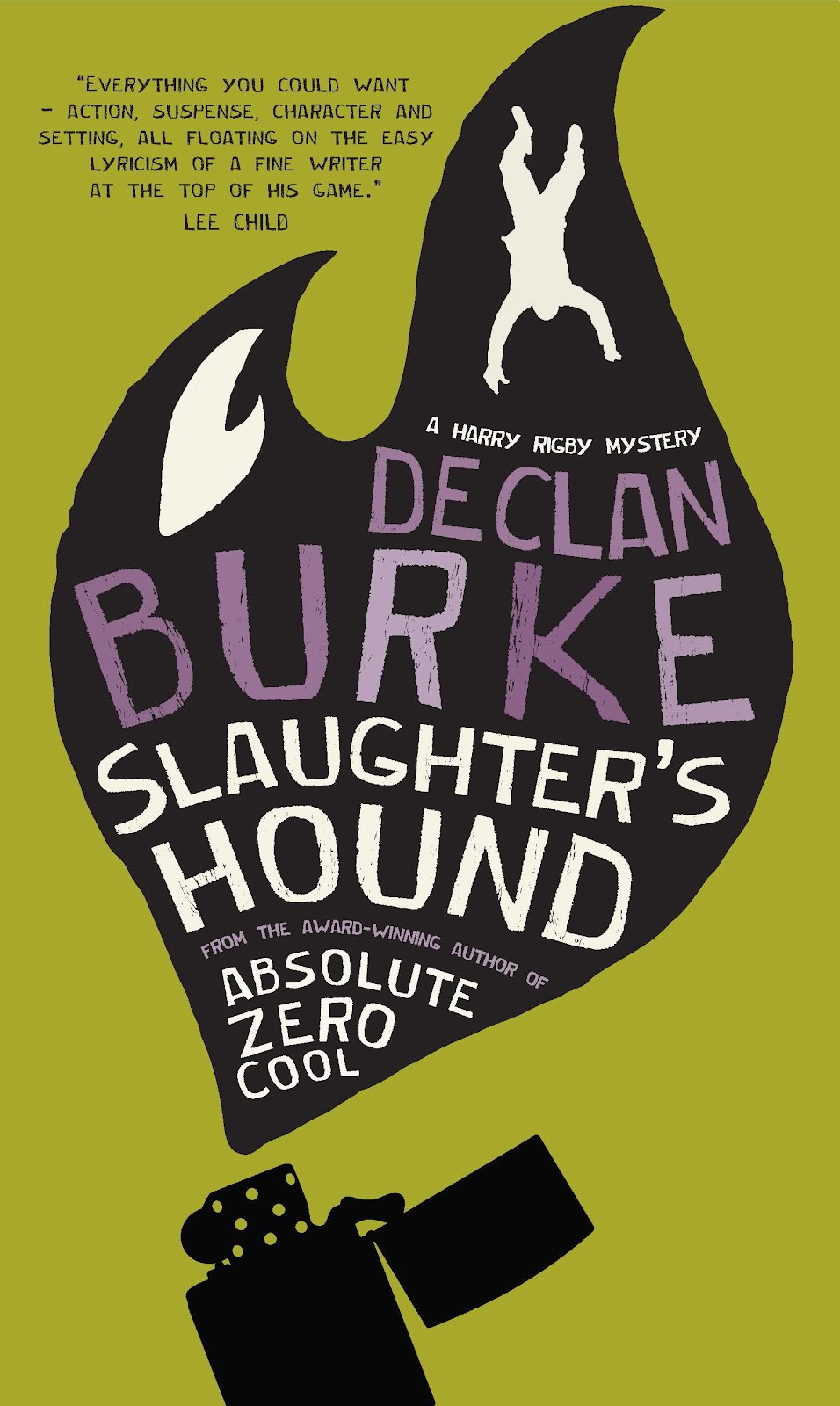
SLAUGHTER’S HOUND: A ‘Hard Boiled Delight’, Apparently
Well that was a very enjoyable a week. Off with yours truly to Manchester last Wednesday, to meet with John Connolly and head to Deansgate Waterstones, where the lovely Barbara Nadel was waiting, along with an impressive number of crime and mystery fans agog to hear about (a) John’s latest tome THE WRATH OF ANGELS and (b) BOOKS TO DIE FOR. A great night was had, and particularly for yours truly, as I got to meet with the Book Witch again, after a hiatus of about four years. Not that you’d know she’d enjoyed the experience. Very Scandinavian in her emotions, said Witch. I think I came away with frostbite of the soul. Still, the fact that she brought along a lovely book for the equally lovely Lily did help me thaw out later on …
Off with us to Scarborough then on Thursday, with yours truly doing the navigating, which is always a recipe for disaster. And so it proved, but we’ll draw a discreet veil, etc. Scarborough was a smashing evening, and it’s a very pretty town too - I’ll be back in short order, and possibly for the literary festival next April. A really, really nice bunch of people …
I wish I could say the same about the folks in Liverpool, but they let a load of Everton fans into the event, which was - appropriately enough - held at the Bridewell One, formerly a police station, and now a venue where the punters get to have a Pimms or two in what used to be holding cells. Nice. Adam Creed was good enough to join John and I on the dais for what turned out to be a hugely enjoyable evening that quickly dispensed with any kind of formality and turned into a Q&A / chat / slagging match that lasted a couple of hours. Weirdly, even the Everton fans behaved themselves. And I had a terrific conversation about Billy Roche. All told, a brilliant end to the week.
And then it was back home this morning, on the red-eye into Dublin, to discover a very nice review for SLAUGHTER’S HOUND in the Guardian, courtesy of Laura Wilson. The gist of it runs a lot like this:
Off with us to Scarborough then on Thursday, with yours truly doing the navigating, which is always a recipe for disaster. And so it proved, but we’ll draw a discreet veil, etc. Scarborough was a smashing evening, and it’s a very pretty town too - I’ll be back in short order, and possibly for the literary festival next April. A really, really nice bunch of people …
I wish I could say the same about the folks in Liverpool, but they let a load of Everton fans into the event, which was - appropriately enough - held at the Bridewell One, formerly a police station, and now a venue where the punters get to have a Pimms or two in what used to be holding cells. Nice. Adam Creed was good enough to join John and I on the dais for what turned out to be a hugely enjoyable evening that quickly dispensed with any kind of formality and turned into a Q&A / chat / slagging match that lasted a couple of hours. Weirdly, even the Everton fans behaved themselves. And I had a terrific conversation about Billy Roche. All told, a brilliant end to the week.
And then it was back home this morning, on the red-eye into Dublin, to discover a very nice review for SLAUGHTER’S HOUND in the Guardian, courtesy of Laura Wilson. The gist of it runs a lot like this:
“Many writers of crime fiction are drawn to the streetwise narrator with the wisecracking voice – Raymond Chandler and Dashiell Hammett have a lot to answer for – but only a handful can make it credible and funny. Irish writer Burke is one who has succeeded spectacularly well … From the arresting opening image to the unexpected twist at the end, this is a hardboiled delight.” - Laura Wilson, The GuardianWhich pretty much sets the seal on a week to remember. And now I’m off to bed. For a week. Nighty-night.
Sunday
That’s Entertainment?
Maybe we can blame Graham Greene, who famously - or infamously - labelled his crime novels ‘entertainments’, although I suspect it goes back a lot further than that. I’m talking about the notion that crime novels - all genre novels, really, but we deal in crime writing here - are obliged to be entertaining, as if it’s incumbent upon crime novelists, or their books, to be clowns, regardless of how sad the clown might be behind the garish make-up.A recent and very positive review of Alan Glynn’s BLOODLAND in the Irish Times is a case in point. Anna Carey wrote the review, and did a very fine job too, in my opinion, finishing up thusly:
“A good thriller is there to entertain the reader as well as make her think - and [BLOODLAND] is a very entertaining book.” - Anna Carey, Irish TimesNow, I’m sure Alan Glynn was very happy with that review, but I do wonder about the distinction being made in that line. There’s no good reason, for example, why the word ‘book’ couldn’t be substituted for ‘thriller’. After all, it’s the function of every book to ‘entertain the reader as well as make her think’. Crime, sci-fi, chick-lit, literary, fantasy, romance, historical biography, quantum physics - if a book on any given topic isn’t entertaining, which is to say enjoyable to read, then why would anyone read it? Are there books that are deliberately written not to entertain? Has any writer ever sat down at the desk with the express intention of writing a book that will bore his or her reader into a coma?
I do hate the notion of ‘special pleading’ on behalf of crime fiction, but I think there’s a case to be made for declaring a moratorium on the use of ‘entertaining’ when it comes to reviewing the genre. I mean, if the book receives a positive review, then surely the fact that the reviewer was entertained is implicit in the good vibes. The moratorium might even be extended to the phrase ‘page-turning’. No, seriously - how else are you going to read a book if it doesn’t involve turning pages?
I suppose what I’m suggesting, and not for the first time, is that crime fiction requires a more rigorous analysis than it generally gets. ‘An entertaining, page-turning read’ is a description that could apply to any good book, from Noddy to ULYSSES. Is it the case that crime fiction is more about breadth than depth, than it’s prime function is to entertain, and saying so suffices as a valid review? Is it the case that the genre doesn’t actually require or deserve a more subtle, nuanced lexicon? Or is it the case that the genre, being perceived as little more than a lurid distraction, and particularly by comparison with other kinds of books, is being ill-served by a self-perpetuating simplification, as often as not by the readers and fans of the genre itself?
In the last month or so, I’ve read a number of books - among them BLOODLAND by Alan Glynn, THE BURNING SOUL by John Connolly, THE END OF EVERYTHING by Megan Abbott, THE KILLER IS DYING by James Sallis and THE END OF THE WASP SEASON by Denise Mina - that are as good as any novel of any stripe I’ve read in the last few years. They are all unmistakably crime fiction titles; all are beautifully written, first and foremost; they also have in common a rare quality of psychological insight as they pursue the flaws and foibles of the human condition. All of which are the essential elements of any good novel, it seems to me.
Anyway, I opened up talking about Alan Glynn, and there’s a lot him about right now. Here’s an excerpt from an interview with the Faber blog, The Thought Fox:
[TF] BLOODLAND has the kind of plot where tiny details at the start lead to huge revelations by the end. How hard is it when writing a story like this to keep back secrets from your readers?For the rest, clickety-click here.
[AG] “It’s not easy. I continually re-read, re-write and revise. At the same time it’s an organic process and the subconscious does a lot of the heavy lifting for you. A connection that in the context of the story might seem inevitable, something meticulously and very deliberately placed there by the author, will often in fact have occurred to me at the very last minute. Maybe it was there all along, waiting to be discovered but the poor sap at the keyboard isn’t necessarily the first one to see it. But then when it all becomes clear, you have the luxury of being able to go back and re-arrange stuff, to re-weight and re-calibrate scenes in the overall context of the story. As the writer, you just have to pay attention, which I suppose isn’t too much to ask. Another way of keeping secrets back from the reader, of course is by not knowing them yourself, as you go along. No plan, therefore, no outline. It’s a good way of keeping things fresh and unpredictable, but it’s also fraught with danger. You can write yourself into a corner. Or fall off the tightrope.”
Meanwhile, you can bag yourself a free signed copy of BLOODLAND over at the Harrogate Festival’s interweb lair, with the competition running until October 9th.
For a couple of nifty reviews to complement Anna Carey’s take in the Irish Times, there’s one here at International Noir, and another courtesy of Laura Wilson at The Guardian.
Finally, for Alan Glynn’s take on his ‘Book of a Lifetime’, aka THE GREAT GATSBY, jump on over to The Independent …
Oh, and as I mentioned a day or so ago, I’ll be doing an event with Alan Glynn at The Rathgar Bookshop this coming Thursday, October 6th, at 7.30pm. He’ll be reading from BLOODLAND, I’ll be reading from ABSOLUTE ZERO COOL, and if there’s anyone still awake after that little lot, we’ll be talking about, y’know, good books and stuff. If you’re around, I’d love to see you there …
Thursday
Nobody Move, This Is A Review: The Irish Times’ Crime Beat # 2,037
Being the latest in yours truly’s crime fiction round-ups for The Newspaper Formerly Known as the Old Lady of D’Olier Street. To wit: Urban Waite’s THE TERROR OF LIVING (Simon & Schuster, £12.99, pb) derives its momentum from the intersecting arcs of three men: Bobby Drake, a deputy in Washington State, who stumbles across a drug-smuggling operation high in the mountains on the US-Canadian border; Phil Hunt, an ex-convict who subsidises his small-time ranching with an occasional trip across the border muling heroin; and Grady Fisher, a psychotic killer detailed to retrieve the missing heroin and murder anyone who might implicate his employers. Those broad strokes run perilously close to the plot of NO COUNTRY FOR OLD MEN (2005), and largely accounts for the comparison to Cormac McCarthy in the novel’s blurb. While THE TERROR OF LIVING lacks McCarthy’s lyricism, the writing is pleasingly spare, muscular and lean, the characters sharply and for the most part sympathetically drawn, and the narrative a compelling blend of breathless plotting and existential angst. Beautifully descriptive in capturing the details of Seattle’s rural hinterland, THE TERROR OF LIVING is a remarkably assured debut.
Louise Penny’s sixth novel, BURY YOUR DEAD (Sphere, £7.99, pb), is something of a curio, and not just for its Quebec setting. Featuring Penny’s recurring series protagonist, Chief Inspector Armand Gamache of the Sûreté, the novel is comprised of three distinct investigations, with Gamache, off-duty and recuperating after an operation went disastrously wrong, surreptitiously investigating the murder of a Quebecois historian who was obsessed with Samuel de Champlain, the legendary founder of Quebec City. Most intriguing, however, is the narrative strand in which Gamache, second-guessing his own investigation in Penny’s previous novel, THE BRUTAL TELLING (2009), sends his second-in-command, Beauvoir, to the bucolic village of Three Pines to unofficially re-open the case. Penny’s interweaving of her various strands is ambitious, and there’s much to enjoy in her affectionate and elegant descriptions of Quebecois foibles and the bitter Canadian winter. That said, first-time readers might find themselves confused by Penny’s rewriting of a previous novel’s plot, and there are times when the story reads like a too fervent homage to Agatha Christie, not least in the finale when not one but two groups of suspects are brought together to hear a detective announce the identity of a murderer.
Peter Leonard’s ALL HE SAW WAS THE GIRL (Faber and Faber, £12.99, pb) also reads like something of a homage, in this case to Elmore Leonard, Peter Leonard’s father. American student McCabe gets kidnapped in a case of mistaken identity in Rome; once released, McCabe sets about retrieving the ransom from the Mafia-connected gang who kidnapped him. A multi-character narrative incorporates Angela, a Mafia don’s daughter, flamboyant Detroit mobster Joey Palermo, ex-Secret Service agent Ray, and Sharon, Ray’s wife and Joey Palermo’s current squeeze. The various narrative arcs converge on Rome and its rural hinterland, both of which Leonard is adept at evoking despite his pared-down style and use of the American vernacular. A bright and breezy comedy crime caper, albeit one which boasts a deadpan tone and blackly comic touches, the story moves at a furious rate as the characters ricochet around Rome. It’s all highly entertaining even if, in the most odious comparison possible, the novel lacks the heft of an Elmore Leonard novel, particularly in terms of the absence of any sense of real menace from the gangsters McCabe and Ray encounter. The killer whose murder propels Laura Wilson’s A CAPITAL CRIME (Quercus, £12.99, pb) also lacks menace, although given that Wilson has based her novel on a true crime that occurred in post-WWII London, and that the murderer is a pathetically child-like creature, the novel is all the more fascinating for its absence. The third novel to feature Wilson’s DI Stratton, after STRATTON’S WAR (2008) and AN EMPTY DEATH (2010), the novel opens with Stratton charged with assembling the evidence that will reinforce John Davies’ confession that he strangled his wife and baby daughter. Satisfied that the facts mostly add up, Stratton sees Davies hanged, but subsequently comes to suspect a miscarriage of justice. Meticulously researched, A CAPITAL CRIME is suffused with an almost claustrophobic sense of post-war London, a city still suffering from the impact of rationing and only reluctantly coming to terms with the decline of Britain’s empire. Stratton himself is an immensely likeable character, an amiable and morally upright policeman who is only too aware of his own flaws. Wilson neatly contrasts Stratton’s ongoing mourning for his dead wife with his daughter’s dawning awareness of her lesbian sexuality, blending the personal with the more political aspects of Stratton’s professional self-doubt in a very satisfying historical police procedural.
Set in rural Mississippi, Tom Franklin’s CROOKED LETTER, CROOKED LETTER (Macmillan, £11.99, pb) opens with the shooting of small town mechanic Larry Ott, a semi-recluse who has long been suspected of the abduction and murder of a local girl some decades before. Local deputy Silas Jones is reluctant to lead the investigation into the shooting, as he and Larry were childhood friends before an ugly racial incident drove them apart, but the disappearance of another young girl overrules Silas’s personal distaste for the case. Ostensibly a police procedural, Franklin’s third novel deploys the genre’s narrative conventions as a framework for a much deeper exploration of the psychology of small-town America and its recent racist past. Both Larry and Silas are superbly drawn and fully fleshed characters, their personalities and conflict chthonic to rural Mississippi but luminously relevant, in Franklin’s hands, to any locale on the planet. Factor in a mesmerising evocation of rural Mississippi, language of sinuous and shimmering elegance, and a finely tuned ear for the nuances of dialogue, and you have a novel that is an early contender for one of the great novels of the year. - Declan BurkeThis article was first published in The Irish Times
Friday
FIELDS Of Dreams
Good news for Alan Glynn, people – the movie based on his debut novel, DARK FIELDS, is up and running again. The project was to have starred Shia LaBeouf, but that didn’t happen after LaBeouf broke his arm, but now it’s green lights for filming to start next spring, with Bradley Cooper (The Hangover, The A-Team) playing the lead in a tale that is being described as ‘Fight Club meets The Game’. Nice. It’s a terrific novel, so do yourself a favour and check it out before it hits the silver screen … In other Glynn-related news, WINTERLAND gets its official launch on Tuesday, November 17th, at the Dubray Bookshop on Grafton Street, Dublin (kick-off 6.30pm). Lauded to the heavens by the likes of John Connolly, Ken Bruen, Val McDermid and George Pelecanos, WINTERLAND deserves all the plaudits going, and more. Mark it down in your diary now – this is one you’ll want to tell the grandkids about …
UPDATE: Laura Wilson reviews WINTERLAND in The Guardian. To wit:
“ … a heavyweight, grown-up thriller set in Dublin against a background of dirty politics and even dirtier business dealings … Emotionally truthful, with a plausible cast, and told in wonderfully fluent prose, WINTERLAND is a gripping tale of a world of greed and secrets.”
Wednesday
You Can Call Him Al. If He Can Call You Betty
Roughly this time last year, the following appeared in a post on Crime Always Pays: “One last pertinent thought on what might well be the most important issue the crime fiction industry will have to face in the immediate future. To wit: has anyone else noticed Shy Al Guthrie’s (right) eyelashes? Like kitten’s whiskers, they are. Enough to make a Grand Vizier kick a hole in his stained-glass harem window.”Allan Guthrie is something of a favourite at CAP, but it’s not just his limpid eyes. Put simply, the guy’s a master of the modern noir. Don’t believe me? I can’t blame you. But maybe you’ll believe Laura Wilson over at The Guardian, writing on Guthrie’s latest, SLAMMER:
“Scottish writer Guthrie’s prose is a series of short, sharp shocks, reeking of the visceral brutality of the toughest contemporary noir …”The Scotsman likes it too.
To wit: “Allan Guthrie’s SLAMMER succeeds in brilliantly turning the genre on its head in a book as inventive and groundbreaking as it is magnificently written … With SLAMMER, Guthrie has written a superb novel that will leave you thinking hard about life for a long time afterwards, and there’s not much higher praise than that.”That second review, by the way, also contains a review of BEAST OF BURDEN by some arm-chancing ne’er-do-well called Ray Banks. A handsome cove, he’ll nonetheless have to get out the old eyelash-straightener if he’s to compete with Shy Al. Raymundo? Would it hurt to use a smidge of mascara once in a while? Think of your audience, man.
Labels:
Allan Guthrie,
Beast of Burden,
Laura Wilson,
Ray Banks,
Slammer
Monday
Around The Web In 80 Seconds*
Gerard Brennan over at CSNI mocks up a cover for Adrian McKinty’s forthcoming FIFTY GRAND (right), and does a damn fine job. GB is plugging the fact that Serpent’s Tail will be published FIFTY GRAND this side of the pond, and he’s also got an excellent interview with John McAllister of LINE OF FLIGHT fame going on. All of which is very nice …
Over at the Sunday Indo, Alison Walsh has a piece on forthcoming Irish novels of interest, among which are the latest from Andrew Nugent, Alex Barclay, Benny Blanco and Sir Kenneth of Bruen …
A couple of new blogs for your delectation: the inimitable Book Witch has branched out into non-book matters of culture and whatnot with CultureWitch – just don’t dare ask who Roger Whitaker is. Meanwhile, Michael Donnellan embarks on The Great Search for Truth, with the latest post pertaining to ‘Roscommon’s Roswell’. Erm, Michael? Those little green men in Roscommon are actually the indigenous natives …
Upward and onward, and KT McCaffrey lets us know that he’ll be swanking around Trim Castle Hotel, Co. Meath, on September 20th, spraffing away about crime fiction in the rather elevated company of Laura Wilson. Nice. KT? Tell Laura we love her. For all in the info on the day, jump on over to KT’s interweb malarkey …
Finally, we haven’t mentioned John McFetridge on Crime Always Pays for, oh, it must be minutes now. John, for those of you recently arriving, will play Stadler to my Waldorf as we partake in a road-trip from Toronto to Baltimore, via NY, Vermont, Boston and Philly, in the week leading up to the Baltimore Bouchercon. I’ll be posting up an itinerary sometime this week, but in the meantime I’m wondering if the guy ever gets fed up being compared to Elmore Leonard. To wit:
“It’s natural to compare McFetridge to Elmore Leonard. He has a similar deadpan humour and a knack for evoking complex, three-dimensional lives with just a few lines of dialogue.John? Just say the word and I can have a cease-and-desist out on the Elmore Leonard references in three minutes flat …It would be equally apt to compare his examination of urban life with that of the television series, The Wire, in the way the cops and criminals operate on parallel tracks, crime and big business are synonymous, and the portrait of a city, bit by bit, comes together in all its squalid, teeming glory.” – Barbara Fister, Reviewing the Evidence
“This top-notch Canadian novel does noir with a wry cynicism that will remind you of Elmore Leonard … The sharp and funny dialogue on both sides is sometimes so terse it’s hard to follow – but well worth it.” – Jane Dickinson, Rocky Mountain News
* Providing you don’t actually click on any of the links
Subscribe to:
Posts (Atom)