Showing posts with label Chris Pavone. Show all posts

Sunday

Event: Crimefest In Bristol

UPDATE: Hearty congrats to L.C. Tyler, who won the Goldsboro ‘Last Laugh’ Award at Crimefest yesterday evening, a deserved winner and a very nice man to boot. Nice one, Len …
  For all the Crimefest award winners, clickety-click here

The Bristol Crimefest 2015 kicks off today, May 14th, and for the first time in what seems like aeons I won’t be spending the weekend propping up the bar at the Bristol Marriott Royal sipping on my patented Pimms-and-liquorice. Bristol’s Crimefest is always a very intimate, friendly affair – as Pimms-and-liquorice-fuelled affairs tend to be – and I’m very disappointed to have to miss out this year. On the plus side, and as mentioned before on these pages, CRIME ALWAYS PAYS (Severn House) has been shortlisted for the Goldsboro ‘Last Laugh’ Award, which will be announced along with a number of awards on Saturday night. To wit:
GOLDSBORO LAST LAUGH AWARD

The Goldsboro Last Laugh Award is for the best humorous crime novel first published in the British Isles in 2014. The £500 prize is sponsored by Goldsboro Books, the UK’s largest specialist in signed and/or first edition books. The winner also receives a Bristol Blue Glass vase.

The nominees are:

– Lawrence Block for The Burglar Who Counted the Spoons (Orion Publishing Group)
– Declan Burke for Crime Always Pays (Severn House Publishers)
– Christopher Fowler for Bryant & May – The Bleeding Heart (Bantam/Transworld)
– Shane Kuhn for Kill Your Boss (Little, Brown Book Group)
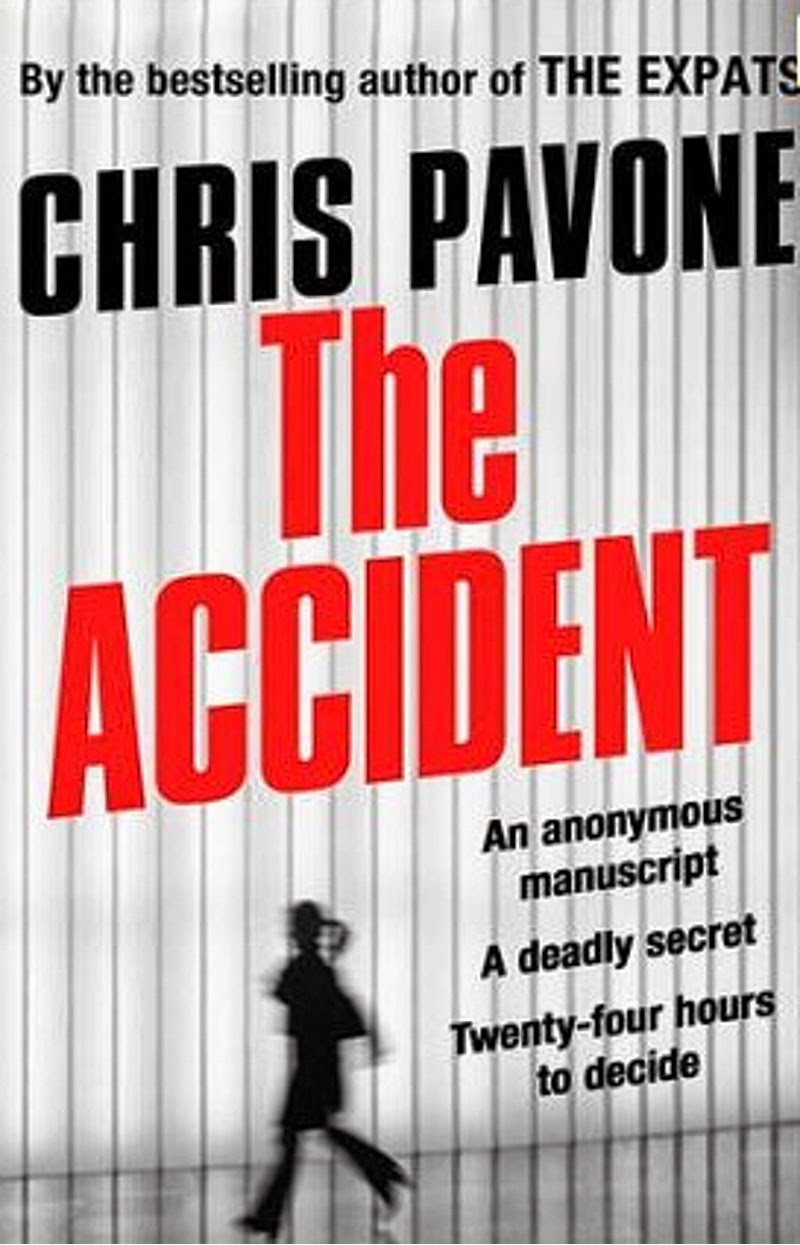
– Chris Pavone for The Accident (Faber & Faber)
– L. C. Tyler for Crooked Herring (Allison & Busby)

Eligible titles were submitted by publishers for the longlist, and a team of British crime fiction reviewers voted to establish the shortlist and the winning title.

CRIMEFEST annually presents a number of awards at its Gala Dinner which in 2015 will be held on Saturday, 16 May.
  The very best of luck to all the nominees, and may the funniest man win.
  For all the details on all of the Crimefest awards, including the eDunnit and Audible awards, clickety-click here

Wednesday

News: CRIME ALWAYS PAYS Shortlisted for Goldsboro Award at Crimefest

As you might imagine, I’m absolutely delighted that CRIME ALWAYS PAYS (Severn House) has been shortlisted for the Goldsboro Last Laugh Award; as the title suggests, the award is given for comic / humorous crime fiction, and as such is something of a rarity. And the Three Regular Readers will know, of course, that I have a soft spot for this particular award because I’ve previously managed to win it, improbably enough. Anyway, the Crimefest blurb runneth thusly:
GOLDSBORO LAST LAUGH AWARD

The Goldsboro Last Laugh Award is for the best humorous crime novel first published in the British Isles in 2014. The £500 prize is sponsored by Goldsboro Books, the UK’s largest specialist in signed and/or first edition books. The winner also receives a Bristol Blue Glass vase.

The nominees are:

– Lawrence Block for The Burglar Who Counted the Spoons (Orion Publishing Group)
– Declan Burke for Crime Always Pays (Severn House Publishers)
– Christopher Fowler for Bryant & May – The Bleeding Heart (Bantam/Transworld)
– Shane Kuhn for Kill Your Boss (Little, Brown Book Group)
– Chris Pavone for The Accident (Faber & Faber)
– L. C. Tyler for Crooked Herring (Allison & Busby)

Eligible titles were submitted by publishers for the longlist, and a team of British crime fiction reviewers voted to establish the shortlist and the winning title.

CRIMEFEST annually presents a number of awards at its Gala Dinner which in 2015 will be held on Saturday, 16 May.
  The very best of luck to all the nominees, and may the funniest man win.
  For all the details on all of the Crimefest awards, including the eDunnit and Audible awards, clickety-click here

Thursday

Interview: Chris Pavone, Author of THE ACCIDENT

It made perfect sense that Chris Pavone’s debut thriller, The Expats, became a critically acclaimed bestseller when it was published in 2011, and that it subsequently won a slew of awards. The American author had, after all, worked as an editor in the publishing industry for almost two decades. Thus he had a canny understanding of the commercial requirements of a genre novel, and an insider’s knowledge of the craft involved in writing a block-busting thriller.
  At least, that’s the theory. Until you realise that Chris Pavone is actually a veteran editor of cook books and gardening tomes.
  He began in the industry as a copy-editor, he says, initially working on fiction. “But when it came time for me to become an acquisitions editor, I turned to non-fiction and cook books and some gardening titles, some fishing books,” Chris tells me when we sit down in the Merrion Hotel. “A lot of what I thought of as ‘light’ subjects, which in many ways were a lot more straightforward-looking to me as a young, still idealistic person. There were things about the fiction side of the business that weren’t quite right to me. It seemed to me that a lot of it was driven by things that didn’t strike me as being important to the work itself, and that wasn’t really true of these other types of books I was publishing.”
  If there’s a hint of cynicism about the fiction publishing industry in those words, it’s a cynicism that is writ large in Pavone’s current novel, The Accident. The story opens with a commissioning editor receiving a manuscript of a book that will, if published, destroy a media mogul’s career and lay bare the dark heart of America’s secret service. A race against time begins as a plethora of characters scheme, plot and murder in order to prevent the publication of the manuscript.
  “The book, for me, is very much about ambition and compromise,” says Pavone. “It’s not that that’s how I see the whole world, but I wanted to write a book that thought that way. The vehicle for feeling out these people’s compromises and ambitions is this manuscript that’s at the heart of The Accident. Everybody looks at this thing in a different way. It is to some extent corrupting to some of them. ‘Is this the point at which I sell out? Is this where I become corrupted?’ Or, ‘Is my corruption still in the future?’”
  The Accident is a pulsating tale that blends thriller, mystery and spy novel tropes and confirms the promise of Pavone’s debut, even if it’s the kind of novel that Pavone, in his younger years, ignored as a reader.
  “One of the epiphanies I had was that I got into publishing because I love literature,” he says. “I loved books by people who were dead before I was born, for the most part, who had won Nobel Prizes. But then it became part of my job to read a John Grisham book every year. I had been very dismissive of popular fiction – in fact, I’d refused to read it. And then I started working on popular fiction, and I realised these books weren’t the same as Hemingway, say, but they were good in a different way. They were great in a different way. I became much more of a relativist about the qualities of a novel. Now I think John Grisham writes fantastic books. They’ve got nothing to do with what Donna Tartt writes, for example, but they’re both writers I enjoy.”
  With two decades of experience under his belt, Chris Pavone was a highly regarded editor in the industry. Why the leap from gamekeeper to poacher?
  “I loved editing, and being a cook book editor is a really a great job. It’s difficult to imagine a more indulgent grown-up job to do, that someone would send you out to restaurants to find great chefs to write a book. But being an editor is essentially about other people’s passions, and helping other people bring out the best of what they have to say to the world. Eventually I realised that I wanted to try to create something myself, and that’s what writing novels is. Not because I wanted to put myself in front of the world, but because I wanted to create something that would go out into the world.”
  As an industry insider, Chris Pavone is more aware than most that the publishing world is today struggling to come to terms with a number of seismic changes in the traditional model. He admits to being ‘a little pessimistic’ about publishing’s future, but remains on the whole optimistic that readers and booksellers will combine to survive and thrive.
  “Bookselling, I believe, is enjoying a resurgence, especially the kind of bookselling we used to think of as booksellers before the advent of chain stores – the Mom & Pop stores, the independent neighbourhood store,” he says. “A lot of the big chain stores are now gone, and independent bookstores are springing up to step into the role again. The book market has levelled out, or at least it’s not declining as fast as it was a number of years ago, and I think readers are understanding more and more what thousands of certain types of independent retailers can bring to the market. That price is not the main consideration. I mean, relatively speaking, books are very inexpensive. A book takes a long time to read, and you don’t pay all that much for it. And paying less for a book isn’t necessarily the goal of every reader.”
  That said, he does believe that the industry may have to configure its ideas about how it generates the profits that will allow it to commission new writers, particularly in the face of the digital revolution.
  “I’m paying a lot more these days for things that I’m told are free,” he says. “But all these ‘free’ things – say on-line – they’re not free. You’re just not paying for the content. But you are paying for internet service. You’re paying for phone service. You’re paying for the hardware. And you’re paying a lot more than you used to pay, you’re just paying different people. We’re now paying telecom companies instead of movie producers and TV networks and book publishers. It doesn’t cost any less, it’s just going in a different direction.”
  With two best-sellers already under his belt, and Hollywood already circling around an adaptation of The Expats, Chris Pavone is particularly pleased that some of the highest praise he has received has come from his fellow writers. As an editor turned author, was he ever worried about push-back from writers concerned that he was muscling in on their territory?
  “I had many, many worries about my first book,” he laughs, “but that wasn’t one of them. I mean, I was worried that the book wasn’t good enough, and nobody would like it, that people would make fun of my ambitions. Waking up in the middle of the night in a cold sweat thinking it was all a huge mistake, and that I was going to die destitute and alone.” He grins. “Y’know, pretty much what every writer worries about.”

  Chris Pavone’s The Accident is published by Faber & Faber.

  This interview was first published in the Irish Examiner.

Wednesday

Review: THE TRUTH ABOUT THE HARRY QUEBERT AFFAIR by Joël Dicker

The physical book may well be under threat from the digital revolution, but a growing number of crime writers have decided that books are more dangerous than endangered. In the last couple of months alone, Pierre Lamaitre’s Irene, Chris Pavone’s The Accident and Liz Nugent’s Unravelling Oliver have all told stories revolving around fictional books – and that’s good old-fashioned paper-and-cardboard books; none of your new-fangled device-friendly e-pub here, thanks, we’re talking books – that offer their characters plausible motives for mayhem and murder.
  The Truth About the Harry Quebert Affair (MacLehose, €14.99), the second novel from Swiss author Joël Dicker, although his first to be translated into English, is the latest thriller to suggest that an obsession with books can prove fatal. It opens with 28-year-old author Marcus Goldman enjoying a celebrity lifestyle in New York courtesy of his bestselling, critically acclaimed debut novel. At least, Marcus appears to be enjoying the life of a literary superstar: the toast of Manhattan’s elite, he is rich, famous and the most eligible bachelor in town. The truth is that Marcus should have begun his second novel a long time ago, but finds himself, with a deadline fast approaching, suffering from a severe case of writer’s block.
  Desperate to get back into his writing routine, Marcus contacts his former college professor and writing mentor, Harry Quebert. Now living in splendid isolation in the remote New Hampshire town of Somerset, Harry Quebert was acclaimed a genius and the leading light of his generation when he published The Origins of Evil in the mid-1970s. Harry urges Marcus to abandon New York and come to Somerset, to find the peace of mind he needs to write.
  Shortly after Marcus arrives in Somerset, the remains of a young girl are dug up on Harry’s property. When the body is identified as that of Nola Kellergan, a 15-year-old girl who went missing in Somerset in 1975, Harry confesses to Marcus that he had been in a relationship with Nola when she disappeared; when it is discovered that the skeleton is clutching a hand-written manuscript of The Origins of Evil, Harry is arrested and charged with Nola Kellergan’s murder.
  The book-within-a-book game doesn’t end there; determined to clear his friend’s name, Marcus embarks on an investigation in tandem with police detective Perry Gahalawood, planning to publish the results of his findings as a book called The Harry Quebert Affair.
  A publishing sensation even before its translation into English – it has already sold in excess of two million copies, with translation rights sold for 32 countries – The Truth About the Harry Quebert Affair is being described as a ‘literary thriller’, and has been compared to Jonathan Franzen and Philip Roth. This is, presumably, on the basis that it is so firmly embedded in the publishing industry – a novel narrated by an author, investigating the literary origins of a famous author’s novel, all the while writing a book about his investigations. Further, each chapter is prefaced with a short dialogue between the younger Marcus Goldman and his mentor Harry Quebert, in which Harry offers his rules for writing.
  Despite its extensive engagement with writers and the business of writing, however, The Truth About the Harry Quebert Affair is by no means a literary thriller. Its prose is neither elegant nor eloquent, and while language often suffers in translation, it’s worth noting that the translator here, Sam Taylor, also translated Laurent Binet’s superb HHhH.
  That said, it’s only fair to say that Joël Dicker isn’t responsible for how his novel is marketed, and that the book doesn’t read as if it were written for a literary audience. Its take on writer’s block, for example, is the unsophisticated notion of an author staring for weeks on end at a blank page, or feverishly scrawling the same word over and over again. A novel is routinely declared ‘great’ or ‘a masterpiece’ while its author is still halfway through its first draft; the story is chock-a-block with reversals of fortune and explosively dramatic reveals rather than the subtly nuanced characterisations and narrative developments we have come to expect from John le Carré and similar masters of the literary thriller.
  Indeed, from very early on it’s clear that Dicker’s ambition is to write a pacy, melodramatic pot-boiler. The rustic New England setting is deftly sketched in, but otherwise realism is at a premium: the depiction of the publishing industry errs on the grotesque side of parody, for example, while it’s highly unlikely, to say the least, that a hardboiled New England cop would agree to allow a bestselling novelist hijack his murder investigation with the stated intention of establishing an alleged child murderer’s innocence. Characters fall in love at the drop of a manuscript, and there are enough skeletons in closets to dance a conga down Main Street. The crucial revelation that drives the novel’s final stages, meanwhile, appears to have been parachuted in from another kind of novel entirely.
  By that point, however, and having already negotiated a couple of thriller’s worth of improbable twists and turns, you’re likely to be conditioned to forgive Joël Dicker virtually any kind of narrative extravagance. The Truth About the Harry Quebert Affair is thriller escapism writ large, irrepressibly exuberant storytelling that tramples realism underfoot as it rattles along at a thunderous pace.
  Yet for all its clunky dialogue and lurid melodrama, there is an undeniably endearing quality to Marcus Goldman’s – and possibly even Joël Dicker’s – faith in the genre’s fundamental conceit, that whimsical but tempting notion that justice can be served and the world made better if only we believe strongly enough in the redemptive power of truth. And once the book is finished and put back in the beach-bag, or stored in the overhead locker, what remains with the reader is the novel’s quiet heart, the heartbreaking poignancy of the image on which it all turns, that of the body of a murdered 15-year-old girl uncovered in a shallow grave and still clutching, three decades after her death, a beloved handwritten manuscript. ~ Declan Burke

  This review was first published in the Irish Times.

Thursday

Review: THE BOY THAT NEVER WAS by Karen Perry

The latest Irish Times crime fiction column appeared last week, and included the new titles from Martin Cruz Smith, Chris Pavone, Natalie Haynes, Tom Rob Smith and Karen Perry. The Karen Perry review ran a lot like this:
Karen Perry is a new writing partnership composed of Karen Gillece and Paul Perry, and their debut The Boy That Never Was (Penguin / Michael Joseph, €14.99) suggests that it will be the first of many. A prologue set in Tangier in 2005 tells the reader that Harry is guilty of negligence in the death, during an earthquake, of his young son Dillon. The story then moves on to Dublin in 2010, when Harry believes he sees his missing son on O’Connell Street during an anti-government demonstration. Unable to persuade the Gardai that Dillon is alive and well, Harry confesses all to his wife, Robin, which is when we start to realise that Harry has a history of obsession and instability, and that Robin also has secrets she needs to conceal. The unreliable narrator is a staple of the crime / mystery genre, but The Boy That Never Was folds another dimension into the convention by offering us a pair of devious narrators. It’s a neat trick, especially as each succeeding account casts doubt on the truth of the previous offering’s events and the mental state of its narrator, with the result that this assured debut is equal parts thriller, mystery and fascinating psychological study. ~ Declan Burke
  For the rest, clickety-click here