Showing posts with label Brian Lindemuth. Show all posts

Monday

When The Barbarians Come They Will Make The Laws; Or, Rome Wasn’t Sacked In One Day

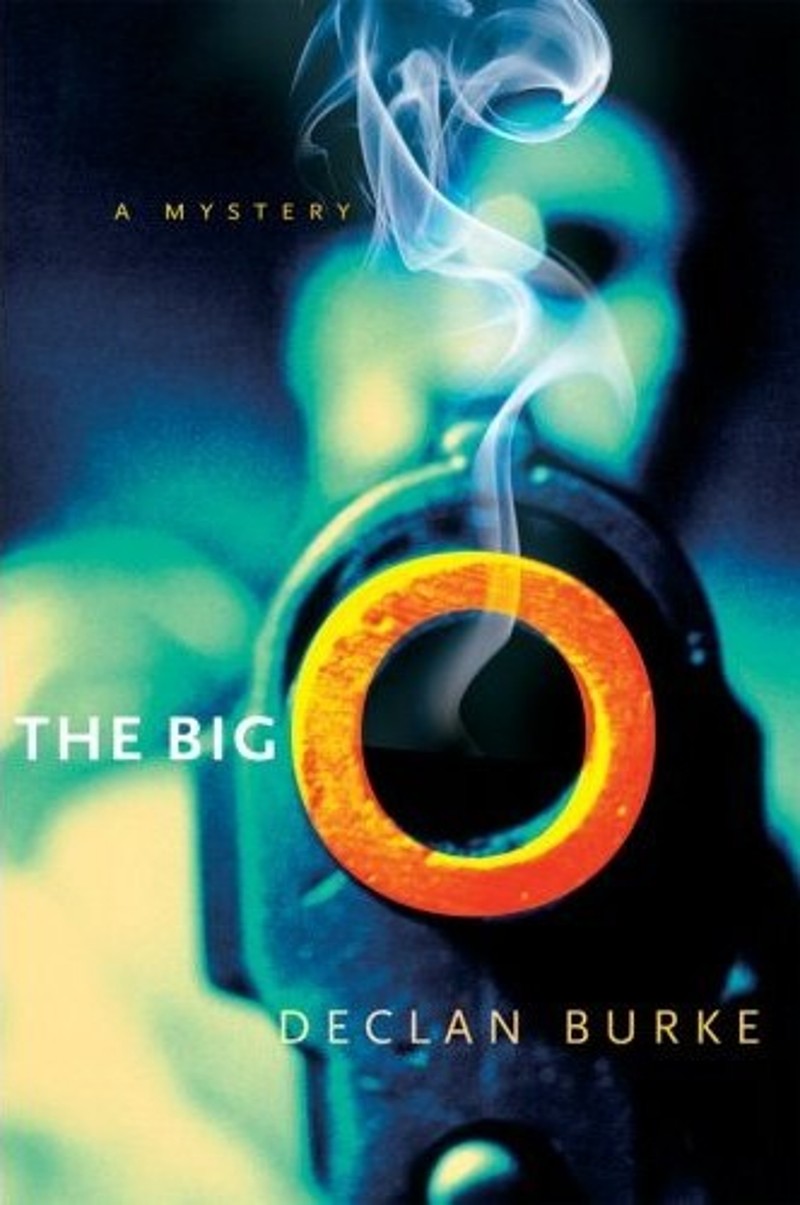
It’s not often I get reviewed these days, which is hardly surprising, given that I haven’t had a book published since God was a lad. Or 2008, to be a little more accurate about it, which was when HMH published THE BIG O in the US. Even so, reviews of THE BIG O do tend to pop up on blogs and websites at irregular intervals, for which I’m very grateful indeed, the latest coming courtesy of Glenna over at Various Random Thoughts, with the gist running thusly:
“It was clever, funny, the characters smart and witty, and a plot evocative of Elmore Leonard … Intelligence, humour, and wonderful characters all made for an enjoyable and quick read.” - Various Random Thoughts
  I thank you kindly, ma’am.
  Print reviews, of course, traditionally appeared in a very narrow window around a book’s publication, but websites and blogs give people the freedom to write about whatever it is they’re reading, however belatedly. Brian Lindemuth, if I’m not mistaken, is taking that notion to another level entirely, by revisiting novels to review them years after they’ve been published, while the Patti Abbott-inspired meme-a-licious ‘Friday’s Forgotten Books’ has been excavating ignored novels for quite some time now, and is very probably the inspiration for Twitter’s ‘Friday Reads’ hash tag.
  It’s not quite the interweb’s fabled long tail, and it may well be the reverse of the long tail, without being an actual short tail, but whatever it is, long may it continue. The increasing volume of books published, combined with the limitations of print reviewing - space, for the most part - mean that most books don’t get reviewed in the traditional way, leaving the interweb to pull in the slack and go some way towards levelling the playing field for upstarts like yours truly. And that’s before we factor in the number of e-only books being published these days, which is very probably the next big growth area for on-line reviewing.
  Anyway, it was a good holiday for me in terms of being reviewed, for two - Oh yes! Two! - reviews of my books appeared. The second gives another little twist on the potential of web-based reviewing, given that Mike Dennis, bless his cotton socks, not only read my current novel-under-consideration, BAD FOR GOOD, aka THE BABY KILLERS, but blogged a review of it over at his interweb lair. The gist:
“The book is a dizzying ride through all phases of author angst, including the ending (which you won’t see coming), and Burke has deftly pushed the envelope just about as far as it can go.” - Mike Dennis
  Now, there’s a very good chance that I’m a little too close to this particular project to be objective about it, but there’s something delightfully subversive about the idea of a novel that hasn’t been published, and may well not be published, being fair game for reviewing. Maybe it’s just a mini-version of Authonomy and suchlike, where writers post excerpts for workshop purposes, and get feedback from their peers, although it’s only fair to say that BAD FOR GOOD is the finished article, for good or ill. Either way, it’s another example of the web’s capacity to bypass, undermine and / or ignore the current model of publishing, which seems to grow more moribund by the day.
  Of course, such reviews - of books that may never grace a shelf - might well be pointless, given that they have no real worth beyond my own gratification. In other words, the writer-critic-reader feedback loop being largely the preserve of dusty academia these days, the industry’s perception of reviews is that they boost sales. So what’s the point of reviewing a book that can’t be monetised?
  Well, the thing is this: once a book is written, and written as well as it can be, then you’re kind of honour bound as its writer to do something with it. The traditional thing, of course, is to send said tome to your agent, if you have one, or to a slush-pile, and I have taken the traditional steps. But, given the dynamic immediacy of the web, such steps seem almost passive these days. So why not, if there are readers out there willing to read the story, send it to them and see what they think of it? If I may quote Dostoevsky, as I do in BAD FOR GOOD: “You will ask why did I worry myself with such antics. Answer: Because it was very dull to sit with one’s hands folded, and so one began cutting capers.” - Fyodor Dostoevsky, NOTES FROM THE UNDERGROUND.
  Or, more bluntly, and quoting Cavafy: “When the Barbarians come they will make the laws.”
  In short, I’m happy to imagine BAD FOR GOOD as one of a horde of barbarians clamouring at the gates. There’s a very good chance, what with all those pinging arrows and barrels of boiling oil, and all my fellow barbarians a-clamouring, that BFG won’t make it over the battlements. Still, better to die in a gloriously foolhardy assault than starve silently to death beyond the walls. No?

Sunday

Books With Backbone

The Irish crew mightn’t have done so well in the Edgars this year - odd, really, given that there’s usually an Irish presence, and that 2009 was such a fecund year for Irish crime writing - but they’ve been doing okay in other award ceremonies. Stuart Neville, as you might have heard, won the best Mystery / Thriller section in the recent LA Book of the Year awards for THE GHOSTS OF BELFAST (aka THE TWELVE), and he also nabbed the Best Novel: New Voice gong in the Spinetingler Awards. Meanwhile, and staying with the Spinetinglers, Adrian McKinty got the nod for Best Novel: Rising Star Category for FIFTY GRAND, which is belated recognition for what was one of the best novels of last year, in my rarely humble opinion.
  Incidentally, both McKinty and Neville contribute to the forthcoming compilation of crime short stories based on Irish myths, REQUIEMS FOR THE DEPARTED, which promises to be one of the most intriguing collections of the year.
  Anyway, what makes the Spinetingler a pretty special award, I think, is that it’s voted for by the reading public, and a public that’s steeped in the genre to what is very probably an unprecedented degree. All of that takes serious co-ordination, of course, which translates into a lot of blood, sweat and (possibly) tears, all from a team - Sandra Ruttan, Jack Getze, Brian Lindemuth, the Nerd of Noir, and Keith Rawson - that work year-round to promote crime fiction of all stripes. Quoth the Spinetingler team on this year’s award:
This year’s turnout was greater then last years with a total of 4812 votes cast. That’s a huge increase from last year and we’ve seen growth every year. I think I speak for all of us here at Spinetingler when I say we’re glad to see more people participate in them and we have room for a lot more. We hope you enjoyed the awards as much as we did pulling them together. Hopefully at least one of the nominees made you curious enough to check it out because for us that’s the greatest reward. You all did this. And you did something good.
  No, Spinetingler folks, you did all this. And you did something good. Give yourselves a big fat slap on the back.

Saturday

100,000 Not Out

Given that Crime Always Pays came into being to celebrate (mostly) Irish fiction as a platform to promote our humble offering THE BIG O, it’s appropriate that the stats passed the 100,000 mark for page impressions while I was away in the States on a Toronto-Baltimore road-trip designed to mark the publication of said tome in the U.S. Now, 100,000 page impressions in 18 months isn’t exactly the kind of stat to set the interweb aflame, but by the same token – as Twenty Major once pointed out – a blog dedicated to Irish crime fiction is a niche-niche-niche sell, particularly when you’re not actually selling anything.
  Anyhoos, I’m quietly pleased at having reached that mark, not least because many of CAP’s regular visitors have become good mates. I’d been warned by some Bouchercon veterans that the first experience can be overwhelming, given the scale of the operation and the numbers of people there, but when John McFetridge and I finally pulled into Baltimore, the experience was more akin to a reunion.
  Peter Rozovsky I’d met before, during his sojourn to Ireland, and it would have been nice to hook up with him again even if he hadn’t sweated blood organising the Philly leg of John and Dec’s Most Excellent Adventure. Peter? Now that you’re au fait with ‘shite’ and ‘gobshite’, I really must introduce you to ‘shitehawking’ the next time.
  I’d met Donna Moore before too, at Bristol Fest, and it was smashing to meet up with her again, partly because I’d read her terrific GO TO HELENA HANDBASKET in the interim, but mainly because I want her to play Diane Lane when they come to make the movie of my life. There’s nothing like a hug from a flame-haired beauty to make you feel like you belong in Baltimore. Apart from the daily hugs (“Oi, I haven’t had my hug today!”), the best part of seeing the poker maven again was the news that her follow-up novel is currently with her agent, and that she’s mailing me a copy as soon as I sign up for Bristol Fest 2009. Yon Donna Moore, she drives a hard bargain …
  It was nice to meet Jen Jordan, too, my first experience of whom was having my shoulder nuzzled by some random hottie in the convention’s main thoroughfare. But lo! It wasn’t a random hottie, it was Jen Jordan. Nice …
  Sarah Weinman was something of a disappointment, given that I was expecting her to be a matronly ball-breaker of indeterminate age. Dang my britches if she’s not cute as a junebug, and prone to enveloping a man in a hug even before he’s been properly introduced. Nice …
  Back to Bouchercon, which I’ve actually been reluctant to write about this week, on the basis that the experience was something of a bubble I’ve been afraid to puncture. Friendly people willing and eager to talk books all day and all night – sounds like hell, I know, but you get used to anything after a while. Readers, reviewers, bloggers, writers, editors, publicists, publishers and – crucially – booksellers, all mingling freely. Anyone who hasn’t yet grasped how the chaos of minute particles colliding at random at the quantum level can translate into a solid object or force at the macro level should get along to the next Bouchercon in Indianapolis.
  I suppose it helped that I had a foot in a few camps. I was there as a reader, of course, but also as a writer and a blogger / reviewer; and technically speaking, given that THE BIG O was originally a co-publication with Hag’s Head Press, I also had a foot in the publishing / publicity / distribution / selling side of things. So there were a lot of people I was hoping to see.
  Jeff Pierce was one, and it was nice to hang out with him on a couple of occasions. Glenn Harper was another, although we didn’t actually get to sit down and talk books – next time, Glenn, hopefully. I also got to meet Angie Johnson-Schmidt, who was kind enough to help me try to find tobacco in late-night Baltimore, as was Dana King, albeit in vain. It was cool to meet Brian Lindemuth and Sandra Ruttan too – Sandra’s another blogger with a foot in more than one camp. And then there was the effervescent and damn near omniscient Ali Karim, and Clair Lamb, and Janet Rudolph … The inimitable Joe Long came down from New York, to greet me with the words, “So where’s the other prick, Hughes?” And it was terrific to hook up with Jon Jordan and be able to say thanks in person for all the support he’s given me ever since way back when, aka the publication of EIGHTBALL BOOGIE. Jon? You’re a gent, squire.
  Greg Gillespie of Philly’s Port Richmond Books came down to Baltimore on the Saturday, and nice it was to make his acquaintance again, given that he’d brought the troops out in force to Wednesday night’s Noir at the Bar at Fergie’s. Greg was supposed to sleep on the floor of our hotel room that night, but with an 8.30am panel on Sunday morning looming, I cracked around 2am and went to bed, and haven’t seen him since. Can anyone confirm that Greg is okay?
  Incidentally, McFetridge was great company on the road-trip, apart from his insistence in talking up the Toronto Blue Leafs, which plays some weird hybrid of hockey, football and baseball. Well, that and the fact that the Y he booked us into in New York had the noisiest bunk-beds ever made, and that one of the three communal showers was festooned with crime scene-style tape. Other than that, though, he was no more boring than you’d imagine a Canadian writer to be. We may even road-trip again, one day.
  As for the rest, well, this post is already too long – suffice to say that Bouchercon 2008 was a tremendous experience. Ruth Jordan and Judy Bobalik deserve all the credit going, and more.
  It did occur to me at one point that the attendees as a group were heavily skewed towards an older demographic, although that’s easily enough explained when you consider the cost of travelling to a four-day convention that’s a sheer indulgence. And you could also say that crime fiction is a conservative genre, concerned for the most part with upholding the status quo, and that older generations are more likely to be of a conservative bent.
  But here’s the thing – I’ve never had anyone say to me, “Yeah, I got into crime fiction in my fifties.” I was a teenager when the crime bug bit, and I thought I was pretty radical back then, as most teenagers tend to do. Maybe it’s because it’s the most popular kind of writing, and therefore the most accessible, and because the world of gats, molls and grift has a certain surface cool that appeals to the impressionable mind. But once it gets you hooked, it doesn’t let go. It’s odd, especially when you consider that you don’t listen to the same kind of music twenty, thirty or forty years on from your teens, or watch the same kind of movies, or like the same artists, etc. But when I read Ray Chandler today, I enjoy him even more than I did twenty years ago.
  The Big Question: any theories as to why crime fiction takes such a compelling grip as to last you an entire lifetime? Over to you, people ...