“Among the most memorable books of the year, of any genre, was Declan Burke’s ABSOLUTE ZERO COOL (Liberties Press) … Burke splices insights into the creative process into a fiendishly dark thriller that evokes the best of Flann O’Brien and Bret Easton Ellis.” - Sunday Times' 'Best Books of the Year'


Crime Always Pays (n): being the blog of Irish author Declan Burke (right, with Chief Helper Elf, the Princess Lilyput), and featuring reviews, interviews and occasionally interesting news about the dicks, dames and desperadoes of (mostly) crime fiction. All of which is designed to help promote his own novels, natch.

Agent: Allan Guthrie, c/o Jenny Brown Associates.

Contact: dbrodb(at)gmail.com.

For daily updates on Irish crime fiction, click here.

Friday, January 7, 2011

Grow Up, Colfer! Oh, Right …

Rumours of an adult crime fiction novel from Eoin Colfer have been circulating ever since he contributed ‘Taking on PJ’ to the Ken Bruen-edited collection of short stories DUBLIN NOIR (2006), but lo! the moment is finally upon us. Almost. PLUGGED will be published in May, with the blurb elves wittering thusly:
Dan, an Irishman who’s ended up in New Jersey, finds himself embroiled in a world of murder, kidnapping and corrupt cops. Dan works as a bouncer in a seedy club, half in love with hostess Connie. When Connie is murdered on the premises, a vengeful Dan finds himself embroiled in an increasingly deadly sequence of events in which his doctor friend Zeb goes mysteriously missing, a cop-killing female cop becomes his only ally, and he makes an enemy of ruthless drug-dealer Mike Madden. Written with the warmth and wit that make the Artemis Fowl novels so irresistible, though with additional torture and violence, PLUGGED is a brilliant crime debut from a naturally gifted writer with a huge fanbase.
  Brilliant or otherwise, I’m not so sure about it being a ‘crime debut’ - Artemis Fowl is the greatest criminal mastermind of his generation, and HALF MOON INVESTIGATIONS was / is a superb homage to the Chandleresque detective novel, albeit one starring the 12-year-old playground PI, Fletcher Moon: (“My name is Moon. Fletcher Moon. And I’m a private detective. In my twelve years on this spinning ball we call Earth, I’ve seen a lot of things normal people never see. I’ve seen lunch boxes stripped of everything except fruit. I’ve seen counterfeit homework networks that operated in five counties, and I’ve seen truckloads of candy taken from babies …”).
  Excessively pedantic quibbles apart, it’s all kinds of good news that Eoin Colfer is joining the teeming ranks of (adult) Irish crime writers. Is it too much to ask that the sequel feature an acoustic-guitarist-turned-hitman and be called UNPLUGGED?

Wednesday, January 5, 2011

The Kindness Of Strangers: Web 2.0 And Readers’ Reviews

I hope you’ll excuse the trumpet-parping, folks, but I’m having an unusually good week in terms of reviews, and possibly my best week ever, given that all four of my books - two conventionally published, one published as an e-only novel, the last yet to be published - have been reviewed in the space of a short time. I blogged about a couple of reviews for THE BIG O and BAD FOR GOOD on Monday (see Barbarians, below), and almost immediately Michael Malone popped up to say that he had rather improbably included EIGHTBALL BOOGIE, which was published way back in 2003, in the ‘Best Books of 2010’ series he is running on his blog, with the gist running thusly:
“You want a book with heart and brains then look no further … writing that’s so sharp you could shave by it … I am quite frankly in awe of Declan Burke’s ability with a sentence. His writing is at turns lyrical and succinct; his dialogue snaps in your ear and his characters are so real they stay in your head long after you’ve turned the last page.” - Michael Malone
  Which is very nice indeed, sir, and entirely gratifying.
  Shortly after, I got an email notification from Smashwords to say that a reader had reviewed CRIME ALWAYS PAYS. The gist:
CRIME ALWAYS PAYS: A SCREWBALL NOIR (****) is a fun yet complex novel, which definitely falls under the heading of screwball, but not always ‘noir’. There are many of the characters you would expect of that genre though, including cops and robbers, some crooked and some with hearts of gold, there are mysterious dames and shady lawyers, and a crazed wolf thrown in for good measure …
  Burke does an excellent job of quickly outlining each character and then slowly revealing further details about their past, their motives and giving hints at important aspects of their personalities which come to bear in future. The dialogue is humorous and generally realistic but becomes over the top at some points, much like many of Guy Ritchie’s films, which seems to be a common and accurate comparison. Even though many of the characters are amoral, violent, or just greedy, and each has reason to hate one or more of the others, they are all easily likeable and by the end of the novel you want all of them to get what they want, even when that seems impossible.
  There were many aspects of CRIME ALWAYS PAYS which I greatly enjoyed and only a few things which I found distracted me from the story and characters. If this is your ‘go-to’ genre than you may find the jumps between characters, the complex web of relationships, and the over-the-top gangster slang easier to get past than I did. Once I overcame these very minor irritations I became engrossed in the events of the novel, the characters, and the questions posed by many of the characters regarding morality. The unique mixture of a fun cops and robbers caper and the complex plot and character relationships makes this novel highly enjoyable and worth a read, or even a re-read. - Katie Lee
  Again, hugely gratifying, and I thank you kindly, ma’am.
  Leaving aside my fascination with the web’s potential for generating coverage of writers who might not otherwise get a fair shake, not to mention the opportunity it provides to by-pass traditional publishing and go straight to the reader, it’s always nice to know that someone is reading your stories, and nicer still when you know that you haven’t wasted their precious reading time, and particularly nice when a reader goes to all the trouble up writing a review and uploading it. These are not things I take lightly.
  It’s one thing, and a marvellous thing in itself, to be reviewed in the traditional media outlets, but the fact remains that said reviews are written by people who have received a copy of your book for free, and are being paid to write the review. But, and at the risk of being overly sentimental, there’s something a little bit special about a review from a reader who has paid good money to read your story, and then, off their own bat, and with no reward for it, puts in the time and effort to write a review and post it to the web. Above all else it’s a practical example of that much abused phrase ‘the kindness of strangers’, and I deeply appreciate it, and always will.

Tuesday, January 4, 2011

“Ya Wanna Do It Here Or Down The Station, Punk?”: Bill Crider

Yep, it’s rubber-hose time, folks: a rapid-fire Q&A for those shifty-looking usual suspects ...

What crime novel would you most like to have written?
I could make you a very long list, but the two at the top every time would be THE BIG SLEEP and THE MALTESE FALCON. They’d just switch places every now and then.

What fictional character would you most like to have been?
Again, a very long list. Odysseus for the adventures and the cleverness, Spenser for the self-assurance, Superman for the . . . what the heck, let’s go with Superman.

Who do you read for guilty pleasures?
I never feel guilty about anything I read. I have enough other problems with guilt as it is, though sometimes I do feel a little guilty about rereading old books when I could be reading new ones.

Most satisfying writing moment?
When something clicks and I know that what I’m writing doesn’t entirely suck.

The best Irish crime novel is …?
I’m partial to Ken Bruen’s work, so today THE GUARDS would be my pick.

What Irish crime novel would make a great movie?
I think THE BIG O would make a terrific movie, don’t you? It’s by some guy named Burke.

Worst / best thing about being a writer?
There are plenty of good things. Getting paid is one that I enjoy. Finishing a book and liking what you’ve done is another. Worst thing? Having to do the actual work. Why can’t the book just spring from my brain like Athena from the forehead of Zeus? Maybe that would be too painful, but so is writing a book.

The pitch for your next book is …?
Wild hogs. Murder. More wild hogs.

Who are you reading right now?
Just finished reading an oldie, BACKFIRE, by Dan J. Marlowe. Not rereading, so no guilt involved.

God appears and says you can only write OR read. Which would it be?
I’d have to say “read.” Writing is good, but reading is better. And a lot easier.

The three best words to describe your own writing are …?
You should probably be asking my readers. But I’ll go with smooth, clear, and amusing. Well, it amuses me, anyway.

Bill Crider’s MURDER IN THE AIR is published by Minotaur Books. Bill Crider is the editor of DAMN NEAR DEAD 2, a collection of ‘geezer noir’ short stories published by Busted Flush Press.

Monday, January 3, 2011

When The Barbarians Come They Will Make The Laws; Or, Rome Wasn’t Sacked In One Day

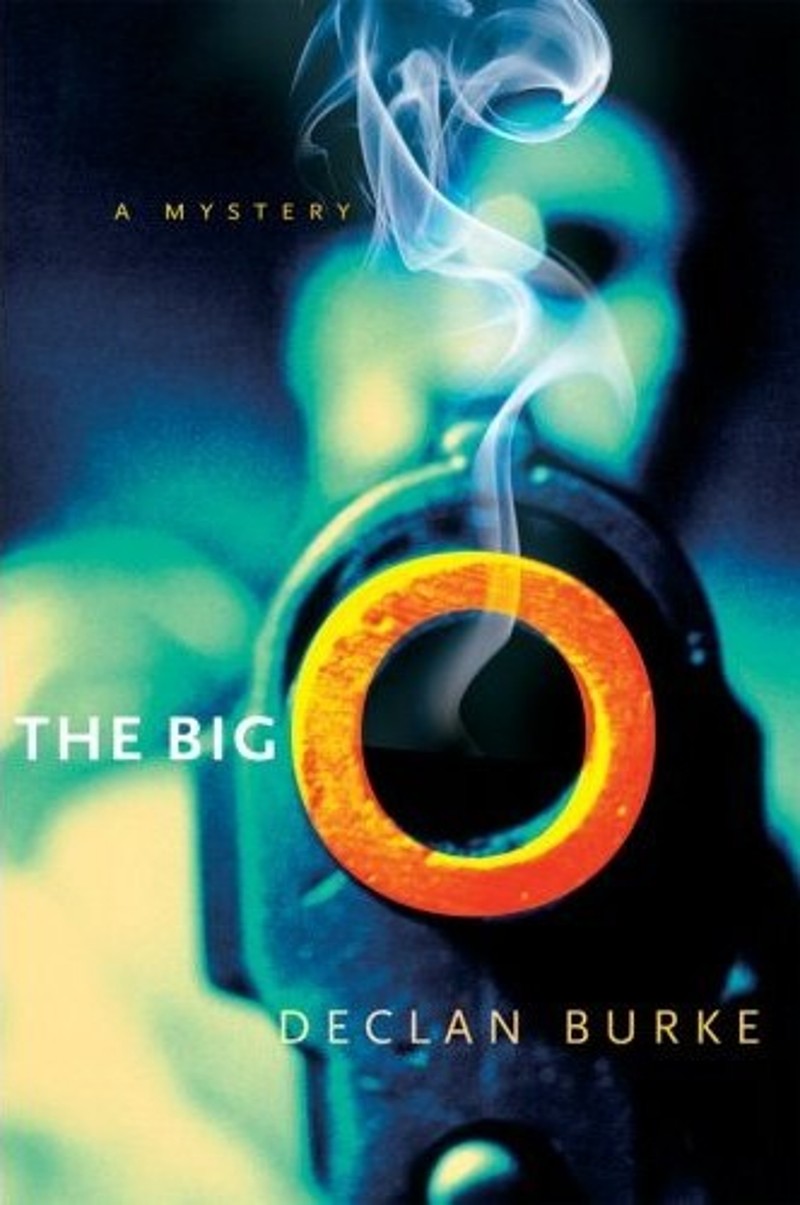
It’s not often I get reviewed these days, which is hardly surprising, given that I haven’t had a book published since God was a lad. Or 2008, to be a little more accurate about it, which was when HMH published THE BIG O in the US. Even so, reviews of THE BIG O do tend to pop up on blogs and websites at irregular intervals, for which I’m very grateful indeed, the latest coming courtesy of Glenna over at Various Random Thoughts, with the gist running thusly:
“It was clever, funny, the characters smart and witty, and a plot evocative of Elmore Leonard … Intelligence, humour, and wonderful characters all made for an enjoyable and quick read.” - Various Random Thoughts
  I thank you kindly, ma’am.
  Print reviews, of course, traditionally appeared in a very narrow window around a book’s publication, but websites and blogs give people the freedom to write about whatever it is they’re reading, however belatedly. Brian Lindemuth, if I’m not mistaken, is taking that notion to another level entirely, by revisiting novels to review them years after they’ve been published, while the Patti Abbott-inspired meme-a-licious ‘Friday’s Forgotten Books’ has been excavating ignored novels for quite some time now, and is very probably the inspiration for Twitter’s ‘Friday Reads’ hash tag.
  It’s not quite the interweb’s fabled long tail, and it may well be the reverse of the long tail, without being an actual short tail, but whatever it is, long may it continue. The increasing volume of books published, combined with the limitations of print reviewing - space, for the most part - mean that most books don’t get reviewed in the traditional way, leaving the interweb to pull in the slack and go some way towards levelling the playing field for upstarts like yours truly. And that’s before we factor in the number of e-only books being published these days, which is very probably the next big growth area for on-line reviewing.
  Anyway, it was a good holiday for me in terms of being reviewed, for two - Oh yes! Two! - reviews of my books appeared. The second gives another little twist on the potential of web-based reviewing, given that Mike Dennis, bless his cotton socks, not only read my current novel-under-consideration, BAD FOR GOOD, aka THE BABY KILLERS, but blogged a review of it over at his interweb lair. The gist:
“The book is a dizzying ride through all phases of author angst, including the ending (which you won’t see coming), and Burke has deftly pushed the envelope just about as far as it can go.” - Mike Dennis
  Now, there’s a very good chance that I’m a little too close to this particular project to be objective about it, but there’s something delightfully subversive about the idea of a novel that hasn’t been published, and may well not be published, being fair game for reviewing. Maybe it’s just a mini-version of Authonomy and suchlike, where writers post excerpts for workshop purposes, and get feedback from their peers, although it’s only fair to say that BAD FOR GOOD is the finished article, for good or ill. Either way, it’s another example of the web’s capacity to bypass, undermine and / or ignore the current model of publishing, which seems to grow more moribund by the day.
  Of course, such reviews - of books that may never grace a shelf - might well be pointless, given that they have no real worth beyond my own gratification. In other words, the writer-critic-reader feedback loop being largely the preserve of dusty academia these days, the industry’s perception of reviews is that they boost sales. So what’s the point of reviewing a book that can’t be monetised?
  Well, the thing is this: once a book is written, and written as well as it can be, then you’re kind of honour bound as its writer to do something with it. The traditional thing, of course, is to send said tome to your agent, if you have one, or to a slush-pile, and I have taken the traditional steps. But, given the dynamic immediacy of the web, such steps seem almost passive these days. So why not, if there are readers out there willing to read the story, send it to them and see what they think of it? If I may quote Dostoevsky, as I do in BAD FOR GOOD: “You will ask why did I worry myself with such antics. Answer: Because it was very dull to sit with one’s hands folded, and so one began cutting capers.” - Fyodor Dostoevsky, NOTES FROM THE UNDERGROUND.
  Or, more bluntly, and quoting Cavafy: “When the Barbarians come they will make the laws.”
  In short, I’m happy to imagine BAD FOR GOOD as one of a horde of barbarians clamouring at the gates. There’s a very good chance, what with all those pinging arrows and barrels of boiling oil, and all my fellow barbarians a-clamouring, that BFG won’t make it over the battlements. Still, better to die in a gloriously foolhardy assault than starve silently to death beyond the walls. No?

Saturday, January 1, 2011

Nobody Move, This Is A Review: SAINTS OF NEW YORK by RJ Ellory

SAINTS OF NEW YORK is a hardboiled police procedural set in contemporary New York, and has for its main protagonist Frank Parrish, who is on the face of it a stereotypical crime fiction protagonist. He is a NYPD detective who is married to the job at the expense of his family; he is divorced from his wife, and has strained relationships with his son and daughter. He is a heavy drinker and has a haunted past which largely relates to his relationship with his dead father, who was a renowned NYPD cop in his time. He has difficulty communicating with those he loves, and is also regarded as something of a loner by his co-workers. He is also under investigation by Internal Affairs, and may well be one wrong move away from being fired.
  By the same token, Ellory is a good enough writer to create a unique character in Frank Parrish. Parrish is compelling in his downward spiral, and the character reminded me very much of a policeman version of Travis Bickle, or of the bad lieutenant played by Harvey Keitel in the movie of the same name, albeit a ‘bad lieutenant’ whose instincts are for justice and the general good of society.
  It’s difficult for the reader not to share Parrish’s obsession. Parrish is absorbed by a case in which teenage girls are abducted and filmed having sex, before being killed and having their bodies dumped. Parrish quickly begins to suspect that he is infiltrating a snuff movie ring, which may or may not be facilitated by a social worker specialising in adopted teenagers.
  It helps hugely that Ellory gets under the skin of New York every bit as effectively as he inhabits Parrish’s skin. SAINTS OF NEW YORK has a real tang of authenticity, which is important given that the story depends heavily on the kind of geographical detail that only native New Yorkers might know. This is worth noting, if only because Ellory is a British writer, albeit one who has set all his novels in America.
  Among the minor characters who populate the novel are Parrish’s new partner, Jimmy Radick, and his daughter, Caitlin. Less peripheral characters are Parrish’s therapist, Dr Marie Griffin, and Parrish’s dead father, John, a legendary NYPD cop and one of the original ‘Saints of New York’, whose shadow still looms large in Frank’s life.
  For much of the novel, Frank Parrish is convinced that his father, John Parrish, was a facilitator for the Mob, who certainly took pay-offs in order that the Mob could infiltrate JFK Airport, and who may or may not have actually killed to order on behalf of the Mob. One of Frank’s obsessions is the difference between the private and the public John Parrish, and one of the reasons Frank drinks is the pressure to live up to the reputation of a man whom he believes to be utterly corrupt.
  John Parrish was involved with a number of gangsters, the most famous of whom was Jimmy Burke, a character fans of the movie Goodfellas will be familiar with. Parrish tells his therapist, Marie, many stories about his father - about the real John Parrish. One of the stories, and the one that underpins his relationship with his father, concerns itself with John Parrish’s involvement in the infamous Lufthansa heist at JFK which forms the backbone to the Goodfellas story, and which was conducted by Jimmy Burke, who was played by Robert De Niro in the movie.
  I was surprised that Ellory devoted so much of the book to such a well known story, and curious as to his motives for doing so. Certainly Frank’s bid to come to terms with his father’s reputation makes for a fascinating strand of the novel, but I’m not sure that inserting a real-life story into the narrative wasn’t more of a distraction than a benefit.
  Another quirky aspect to the story is the way Ellory writes the interaction between Frank and his therapist, Dr Marie Griffin, which is achieved in chapters that are utterly devoid of any descriptive elements, and consist solely of dialogue. Ellory is an excellent descriptive writer, perhaps because of his background in photography and graphic studies, and the novel benefits hugely from his atmospheric descriptions of New York. I’m curious as to why he would deliberately eschew that skill during the conversations between Frank and Marie - although it has to be said, the conceit creates a superb intensity between the pair.
  The victims in the novel, teenage girls who are abducted and killed, are particularly vulnerable, given that they are for the most part adopted, or come from broken homes. While it might seem like something of a cliché, it’s entirely reasonable that the hardboiled, cynical Frank should respond to these victims so comprehensively, not least because their deaths cause him to reflexively think of his own daughter, Caitlin, who lives and works not too from the scenes of the crimes.
  As is usual in crime novels, the protagonist, Frank, becomes entirely consumed by the fate of the killer’s victims. Solving the case becomes Frank’s potential shot at redemption, but Ellory goes way past the clichés in outlining Frank’s empathy for the teenage girls. This is particularly true of the tone. I’ve described SAINTS OF NEW YORK as hardboiled, but there are times when it goes beyond that to verge on the existential. Some of the passages in SAINTS are a very grim kind of Zen. For example, on pg 88, when Parrish thinks about one of the victims:
“And it wasn’t simply that she reminded him of Caitlin [his daughter]. It wasn’t that she was orphaned or had a piece-of-shit junkie brother. It wasn’t that her St. Francis of Assisi friends considered her quiet and funny and pretty and sweet. It was something else. A reminder that if there was no one there to look after you, no one to keep an eye on things, then the world and all its wonders would devour you in a heartbeat.
  “You were there, and then you were gone.”
  And again, on pg 139, when Parrish is thinking about his job:
“Spend thirty years a cop you’re gonna die a cop. There was no easy way out of it. It was not a job, it was a vocation. After that it became a passion, an addiction, a crutch, a belief. Either that, or you got out. Cops didn’t marry well. They were lousy fathers. They walked out of the house into a world that no one else could see, as if only they could perceive the thin veneer that lay between what people believed was reality and reality itself. Reality was behind the crime scene tape. Reality was found at the tip of a stiletto, down the muzzle of a .38, back of a sawn-off Mossberg pump-action shotgun as it unloaded its guts into half a dozen diners in a restaurant on Myrtle Avenue. Reality was a stabbing, a beating, a strangulation, a drowning, a suicide, an overdose, a hanging. Reality was twelve-year-old junkies, fifteen-year-old hookers. It was stealing and running and hiding, and backing up into a corner while the world looked for you, and knowing full well that soon the world would find you and it would all be over.”
  All told, SAINTS OF NEW YORK is a powerful crime novel, inventively rich in its use of language, absorbing in its intensity. Highly recommended. - Declan Burke
Subscribe in a reader